ATELIER OLLIN ON ANCESTRAL FORMS IN CONTEMPORARY DESIGN
Photography by Mara Hoffman
Based in New York City, Atelier Ollin is a furniture and object design studio founded by Noel Hernández and Viktoria Luisa Barbo. Working across sculpture, furniture, and spatial objects, the studio approaches design as a dialogue between material, memory, and time. Their practice took shape during an extended period spent in Hernández’s native Mexico, where proximity to quarries, vernacular construction methods, and overlooked local materials prompted a shift toward a process rooted in land and making.
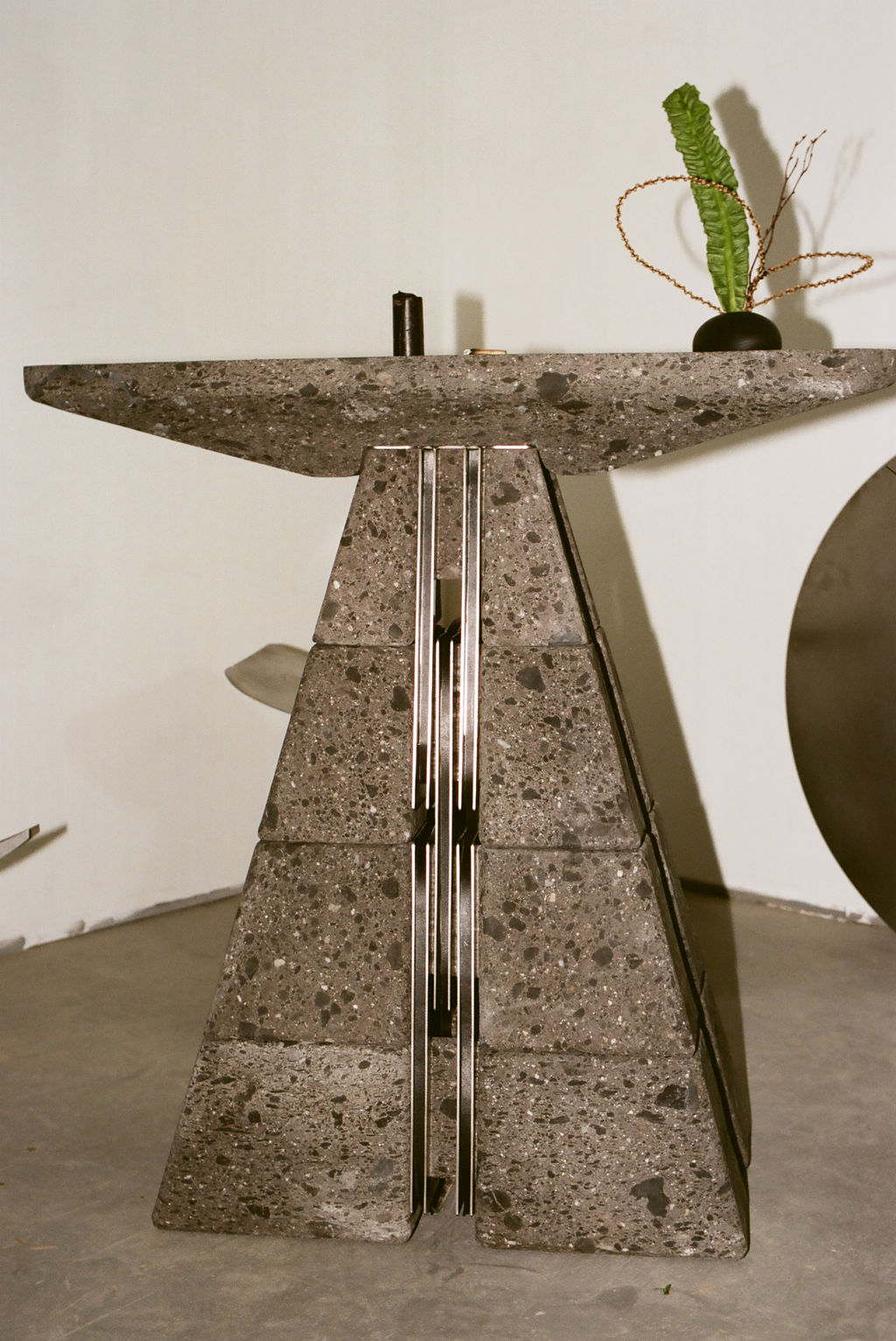
Drawing from ancient mythologies, archaeological forms, and material traditions, Atelier Ollin creates bespoke pieces from volcanic stone, metal, and leather that feel elemental and contemporary. Their work resists the language of trend or stylistic categorization. Instead, form emerges through experimentation, repetition, and an ongoing negotiation with material behavior. Tables and consoles recall ceremonial altars, benches take on the presence of monoliths, and surfaces carry visible traces of transformation.
For Hernández and Barbo, material is not passive. Stone carries geological memory. Metal records heat and force. Leather ages with the body that encounters it. Their objects are not conceived as static products but as evolving artifacts, shaped by their making and by the lives lived around them. Function remains important, but never separate from symbolism, atmosphere, and lived experience.
The studio’s name, Ollin, comes from Nahuatl and refers to movement, transformation, and cyclical change, a concept that anchors their philosophy. Ancient forms, Bauhaus references, urban patterns, and everyday observations coexist, creating a visual language that feels grounded and open-ended.
Atelier Ollin’s practice sits at the intersection of architecture, sculpture, and domestic space. Each object is approached as a spatial intervention, capable of shifting how a room is experienced and how daily behaviors unfold within it.
Materia Magazine contributing editor Anfisa Vrubel spoke with Hernández and Barbo about memory, process, and how ancestral forms continue to shape contemporary design.
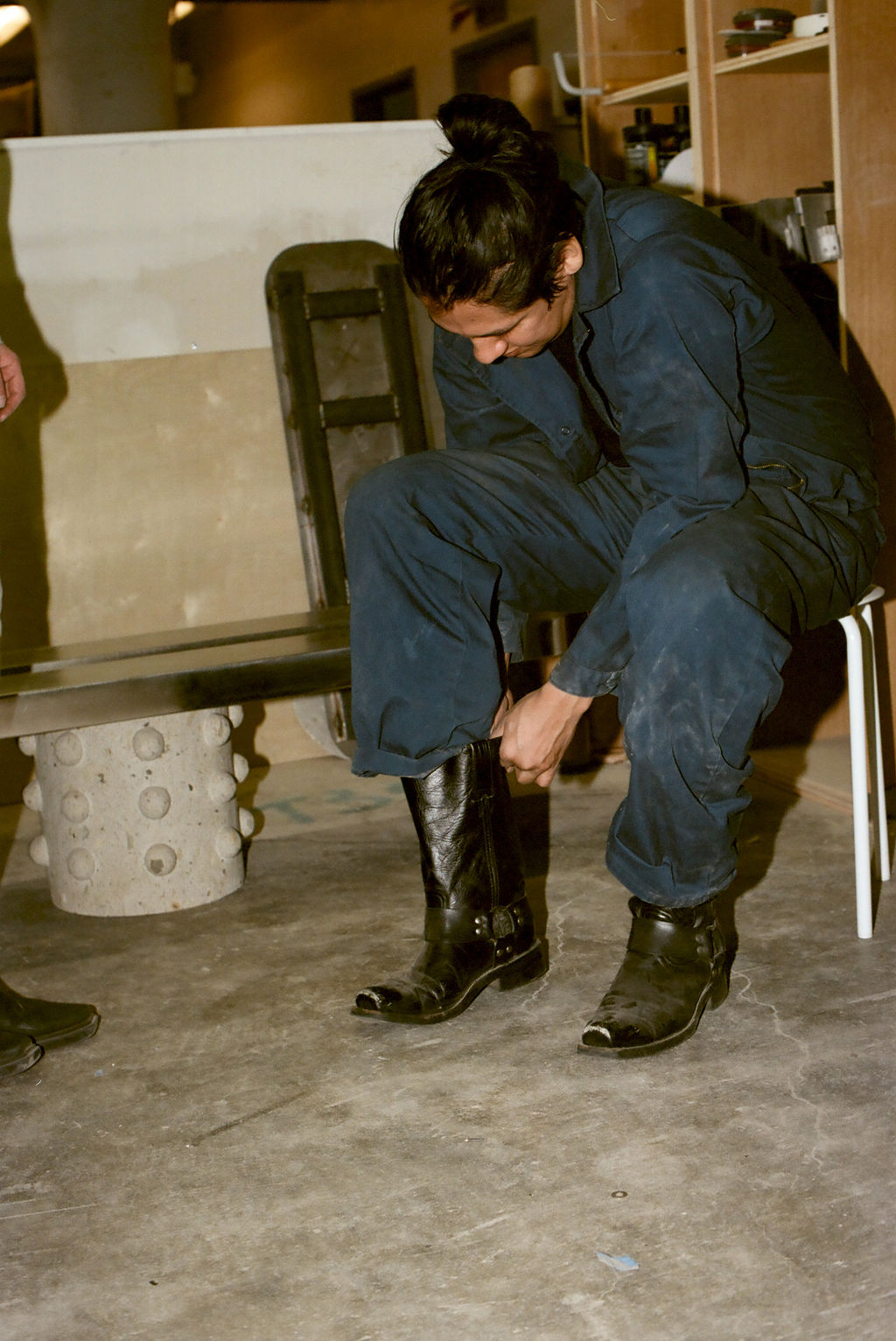
Anfisa Vrubel: I’d like to start with the origins of Atelier Ollin. How did your respective design backgrounds coalesce into a shared practice?
Viktoria Luisa Barbo: I come from the spatial design side, but I’ve always been in between art and design. I grew up in Kassel, Germany which is known for art. Every five years the entire city activates with Documenta, an exhibition of contemporary art. So that really influenced me, seeing different conversations and cultures come together. And for the past ten years I’ve been in New York, with a few years before that in Japan, working in architecture and interior design mostly. I met Noel in New York, which really transformed my thinking about design, art, and furniture. We both have a lot of energy and ideas, and having someone with a similar perception of the world to share that with is really special. The origin of Atelier Ollin was both of us having all these similar thoughts about spaces, as well as the objects that shape spaces.
Noel Hernandez: My background is in architecture and after moving to New York I ended up working in art fabrication. For the longest time, I’ve been more focused on the technical side of things. When I met Viktoria, it was the perfect meeting of the minds. She was still in school when we met and it was really nice to eavesdrop on what she was reading and researching – a bunch of weird stuff that we both liked but that I had forgotten all about. It was a way of getting back to my roots, and it helped shake loose old ideas. We’ve been talking nonsense ever since.
AV: Stone, especially volcanic and marble varieties, features prominently in your work. What draws you to the material that you use, and how do you approach the material before drawing form from it?
NH: During the pandemic, we went back home to my family’s house in Tamaulipas, a border city in Mexico, thinking we would be there for two weeks. But it turned into a ten month stint, and it was the perfect time to tune everything out. There are all these rock quarries there, and volcanic stone like cantera. Growing up, my dad was a truck driver and he would haul materials like limestone from construction sites, and whatever was left over at the end of the day he would dump in our back property. There were always swirls of red and black and whites mixed into the ground. The first thing we did when we were in Tamaulipas was think about how we can cut out a big square from the dirt, because that’s like a painting right there. We’d try to put cement into the ground and carve it, and we did a bunch of earthwork studies and experiments with the ground.
VLB: We went to a stone yard because I was super interested in all of the materials in this new environment – the stone and the plants, everything was so different. That’s where I saw cantera for the first time, and I realized that this stone is so ubiquitous. They were using it for buildings, for fountains. It was even used in old Aztec temples. The stone is so unique, so we had to do something with it. I had columns carved out of it, and we realized that you can really work the stone. Cantera is a soft volcanic stone that naturally has interesting inclusions and striations, so it can be anything from a natural pink all the way to a white green or an intense, dark black. The Aztec pyramids were made with dark cantera rock, which ages in an interesting way over time because some pieces are harder than others. You can really trace time through it.
AV: So the experience of being together in Mexico was foundational to your design practice.
NH: Seeing Viktoria get so excited about it was oddly inspiring because you take things for granted when you’re used to them. Oaxaca has a culture, Puebla has a culture, but when you’re looking at the border towns, a lot of the culture has been erased because we’re close to the United States. So if there’s a culture, it revolves more around the maquiladoras [foreign-run factories] or narco culture, and it’s not so much a culture of making. It’s all been plowed through. The local material, at least for me, had been somewhat forgotten. So it was a nice moment to be like, “Well, maybe we don’t do marble and the Italian high stones.” Instead, we focused on what is in Mexico, which is recinto, tezontle, cantera. Everything’s sourced a couple kilometers from my parents’ house, so it’s hyper-local.
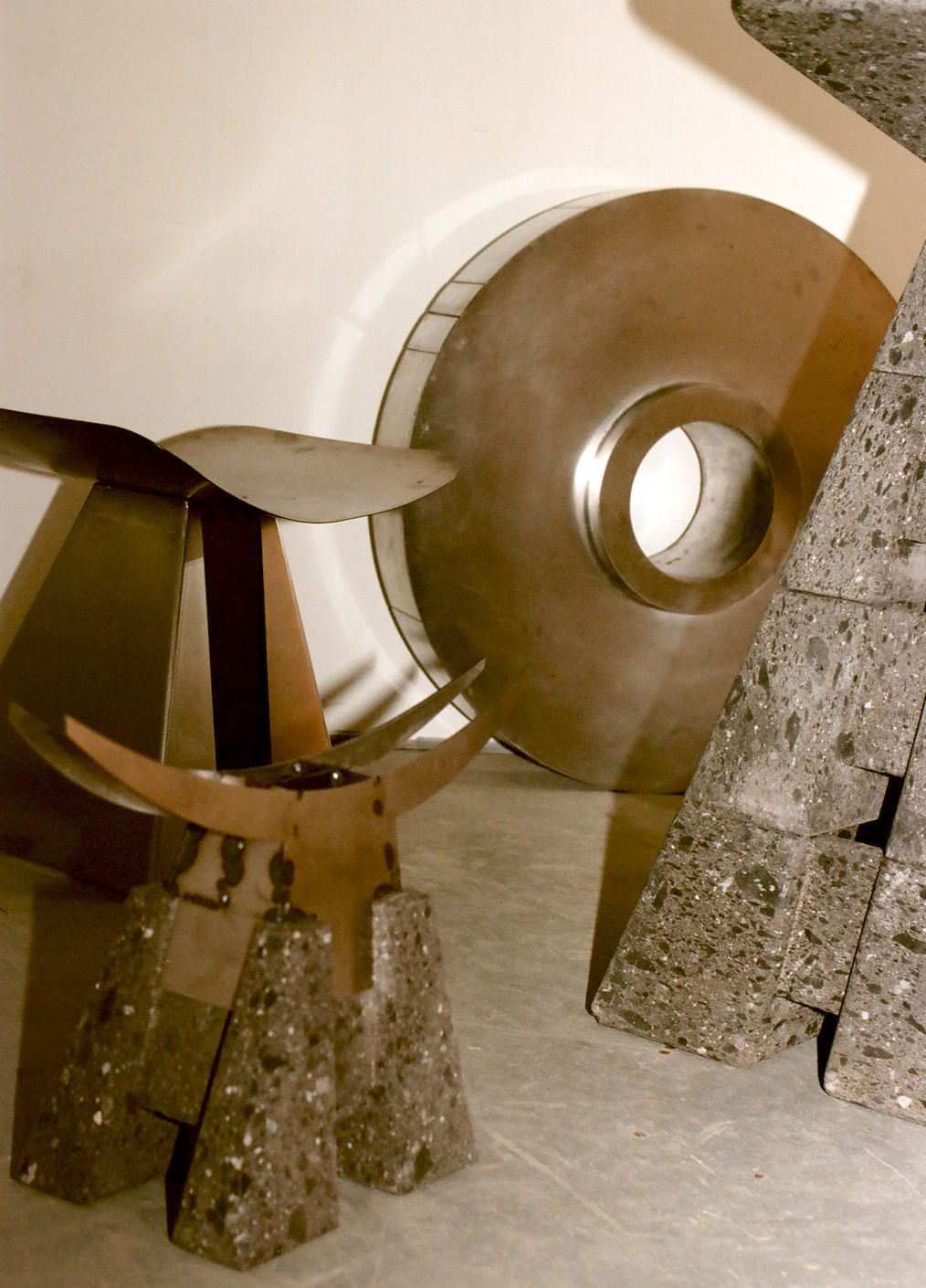
History is our shared interest and it’s also behind the name Atelier Ollin, which literally means transformation and constant change. That’s why we try to borrow from forms and proportions that are ancient and anachronistic, estranging and taking them to another place.
— VIKTORIA LUISA BARBO
AV: So what began grounded in experimentation and seeing what’s on the land evolved into inventive works that reference ancient histories and cosmologies, like the Tlaloc series. How do pre-Hispanic and other ancestral narratives inform form, structure, or presence in your work?
NH: Ever since we met, it’s been a process-based philosophy. It was like a metamorphosis – how one material or one thing can transform and be many things, how it can change its physical shape and manifestation.
VLB: History is our shared interest and it’s also behind the name Atelier Ollin, which literally means transformation and constant change. That’s why we try to borrow from forms and proportions that are ancient and anachronistic, estranging and taking them to another place. We love seeing how people see the ancient reinterpreted in our furniture. And that’s something that binds cultures together because if you go far back in time, many of the forms that humans gravitate to around the world are very similar.
AV: How do you balance instinct and intentionality while working in dialogue with the material?
NH: We articulate our process through sketches, constant clippings that we send each other, and being better about archiving. We’re always trying to find a home for our ideas.
VLB: We work intuitively, but at the same time we do a lot of research. We love researching old forms but also references going all the way to the Bauhaus. I grew up in Germany and I studied at the Bauhaus, so that’s part of my history. There’s a lot of referencing, but it’s also very personal. For example, one of our tables is inspired by the pattern of the New York City subway because we’re surrounded by it every day. That’s the beautiful thing about being a human: you soak up different references and all of the sudden you realize that it’s a familiar pattern to you. On the one hand, it reminds you of the corn kernels in Mexico but on the other hand, it is also the New York subway, right?
AV: That’s what struck me about your work, this reinterpreting and layering of the ancient and the modern into forms that feel unexpected and new. How do you balance functional design with symbolic and poetic intention? Are there moments when you intentionally push an object towards ritual rather than utility?
VLB: It’s almost like we chisel away from the shape of the stone. It starts off as maybe a bit eccentric but then we try to imagine it in someone’s place. Often, we build mockups and try to visualize a piece in our own space. Finding the right scale for some of these monumental forms is quite important.
NH: What we’re trying to resist is the urge to do the architect thing where we take a complex idea and we diagram it, break it down, and forge a narrative around it. Instead of trying to have a piece embody a complicated idea frozen in time, we want to be inspired by something without making it look like that thing. We’re happiest when we’re just drawing things and experimenting with form and function – that’s the ethos that keeps on driving us. We’re recombining things, throwing one material on top of another and seeing how we can arrange them in a new way. We’re open to serendipity. For us, the metal and the rock becomes about matter transforming and melting into different states of being, how it can be both polished and rough.
AV: I love how you mix different materials, it’s truly a hybrid of forms and textures. What’s the production process like for these pieces?
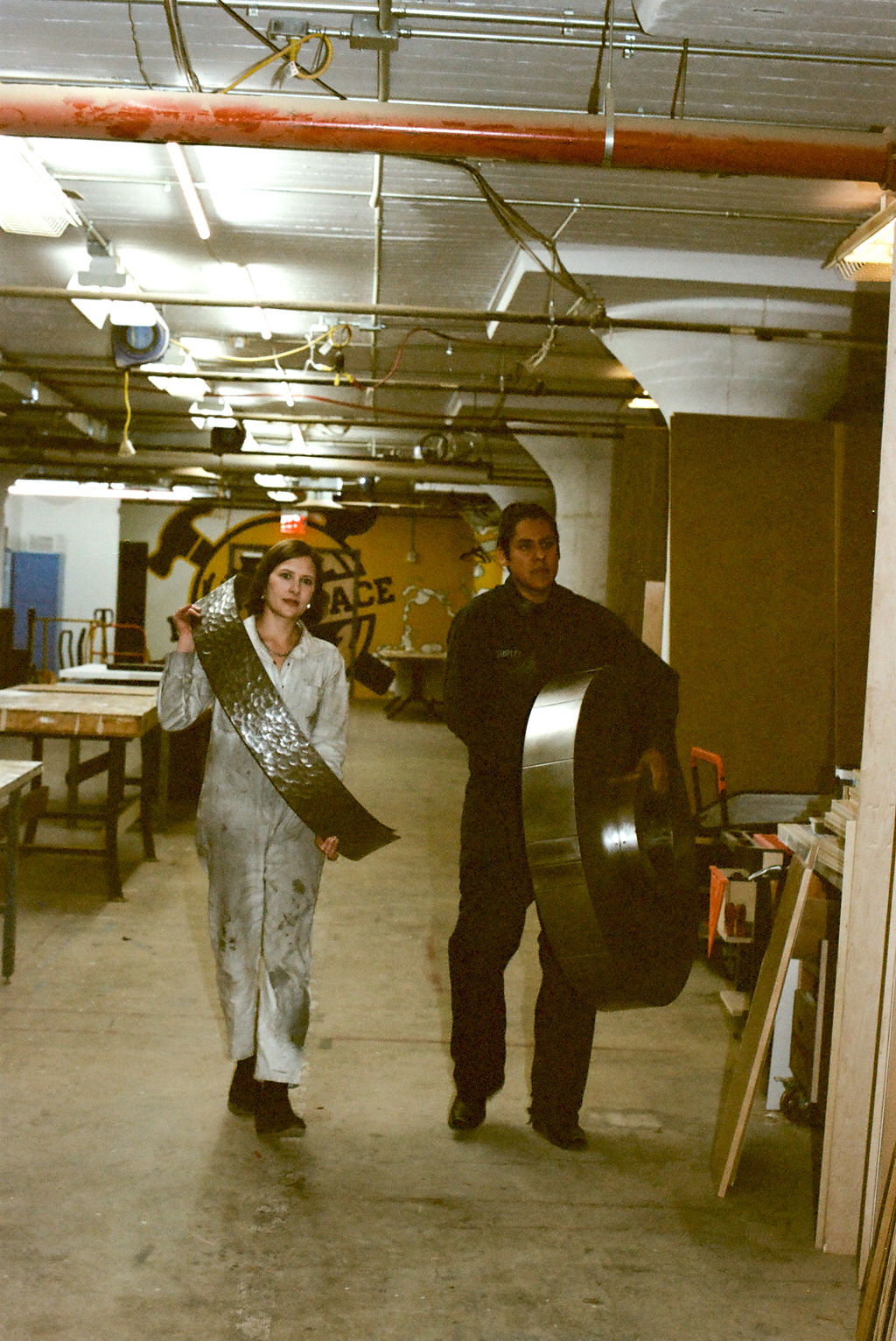
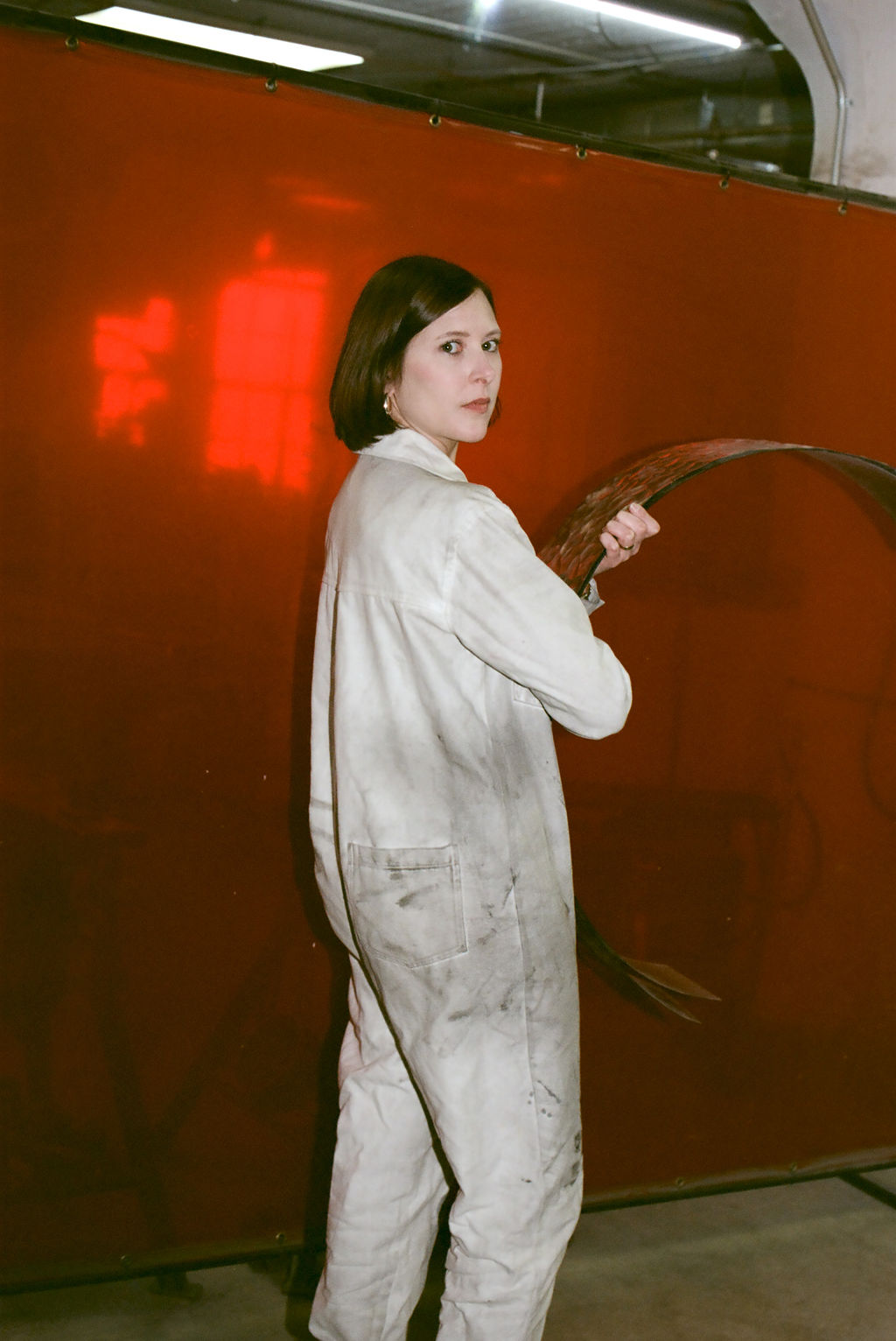
NH: All the stone is hand-carved and all the metal is hand-forged and welded. It’s a very technical welding process to make sure it’s perfect and beautiful.
VLB: We literally put our hands to work. All the prototypes are done with less precious metals to study the welds and make sure that the detailing really works. It’s all done by hand and the craftsmanship is something that we deeply value. We actually love that the stone is not as controllable as metal, because that means every table will have unique properties. Another thing that we really appreciate is people being able to live with these pieces in a way that’s specific to them. We think that living with these objects means that you will want to change them over time and so that’s why all of them are modular and mechanically-assembled. You can take pieces apart and reconfigure them. With our Kuaku chair from the Tlaloc collection, for example, you can take the entire top off because it’s magnetic. So you can change your mind, and adapt the piece to your space.
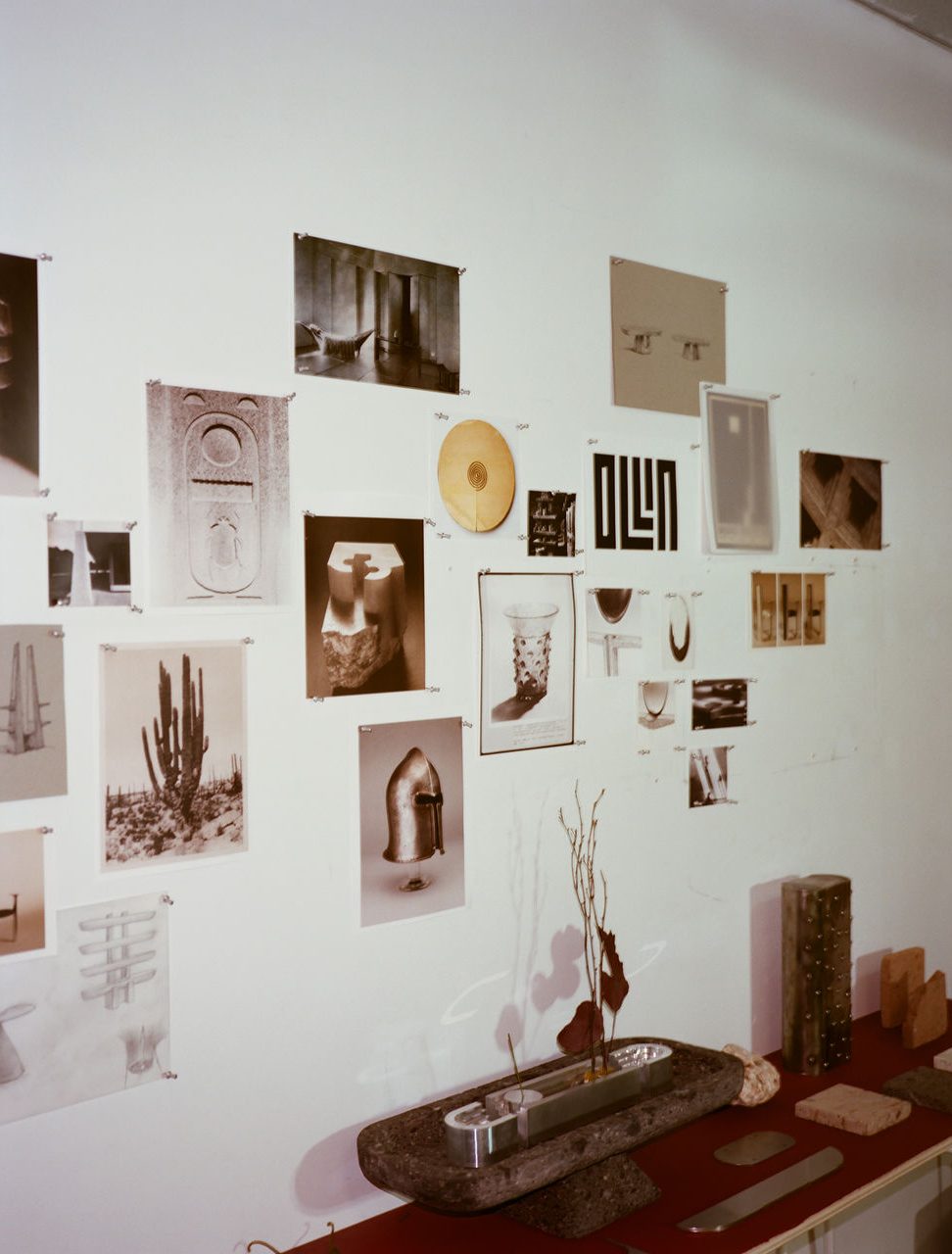
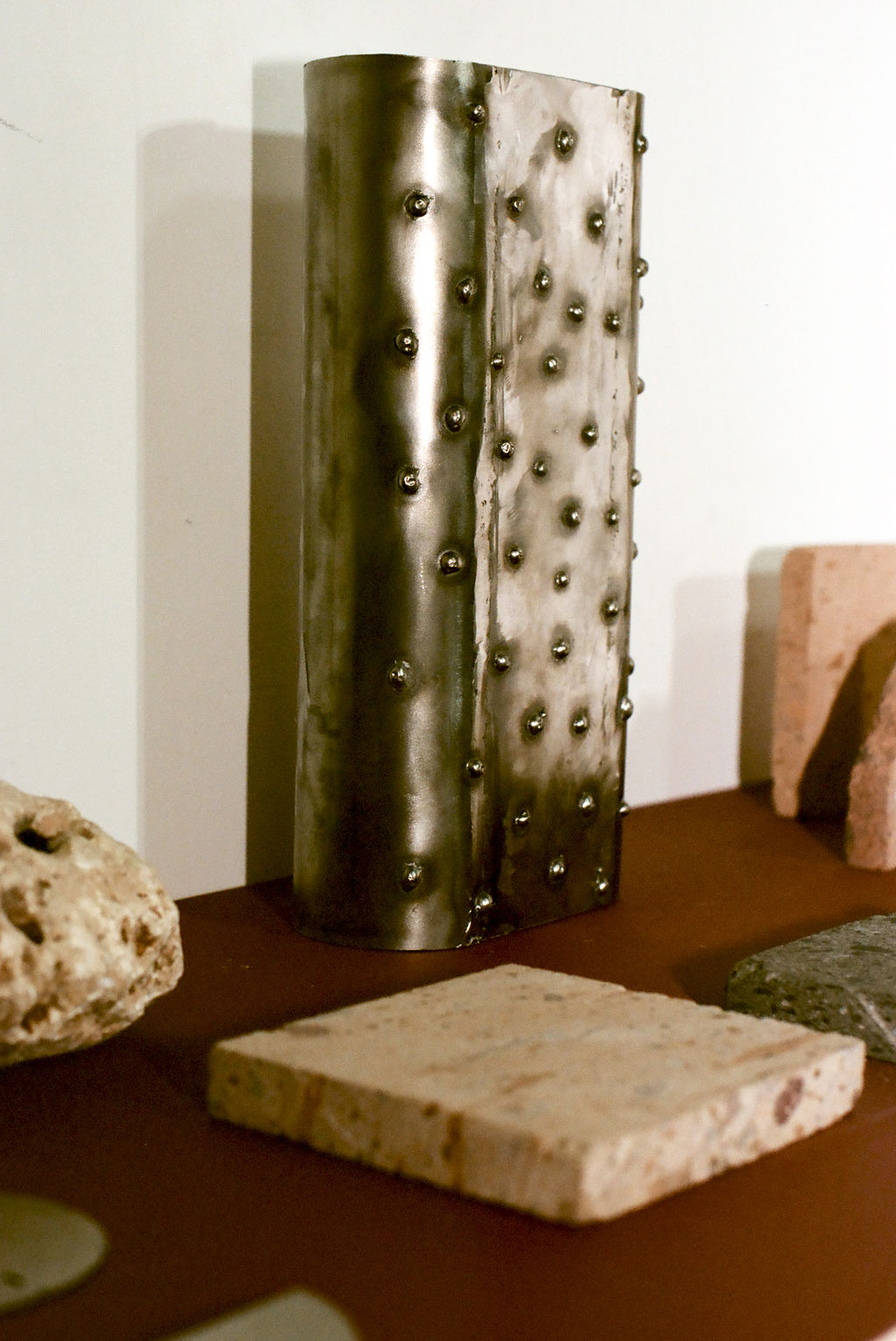
AV: In thinking about your work as objects infused with histories, what does timelessness mean to you? Is having something endure an important aspect for you?
NH: It’s a big drive. It’s somewhere between a sense of social responsibility, but it also feels beautiful to create something that inspires someone to keep it longer. And we’re trying to find that middle ground for ourselves – we want the work to be expressive but we don’t want it to be so expressive that you get tired of it talking to you. We want to give people the option to update a piece if they want to without getting rid of it. For example, we made a round table that can be turned into a mirror. For us, that’s the best way to make sure people have an heirloom. We’re not an heirloom culture anymore. We’re really bad at keeping stuff.
AV: And how do you see these pieces changing with time? Do they accrue changes in texture and color over time?
NH: Our first collection is all stainless, so it’s not going to change much. Stone is more likely to do that. We are working on some pieces in white bronze and other metals that have a patina that can show more time and wear. Our current pieces are more about mixing materials that have zero variations and imperfections with ones that are all about the imperfections. Right now, we’re trying to find materials that age differently with wear.
AV: Was there any material that you worked with that surprised you or set you on a different trajectory than what you initially expected?
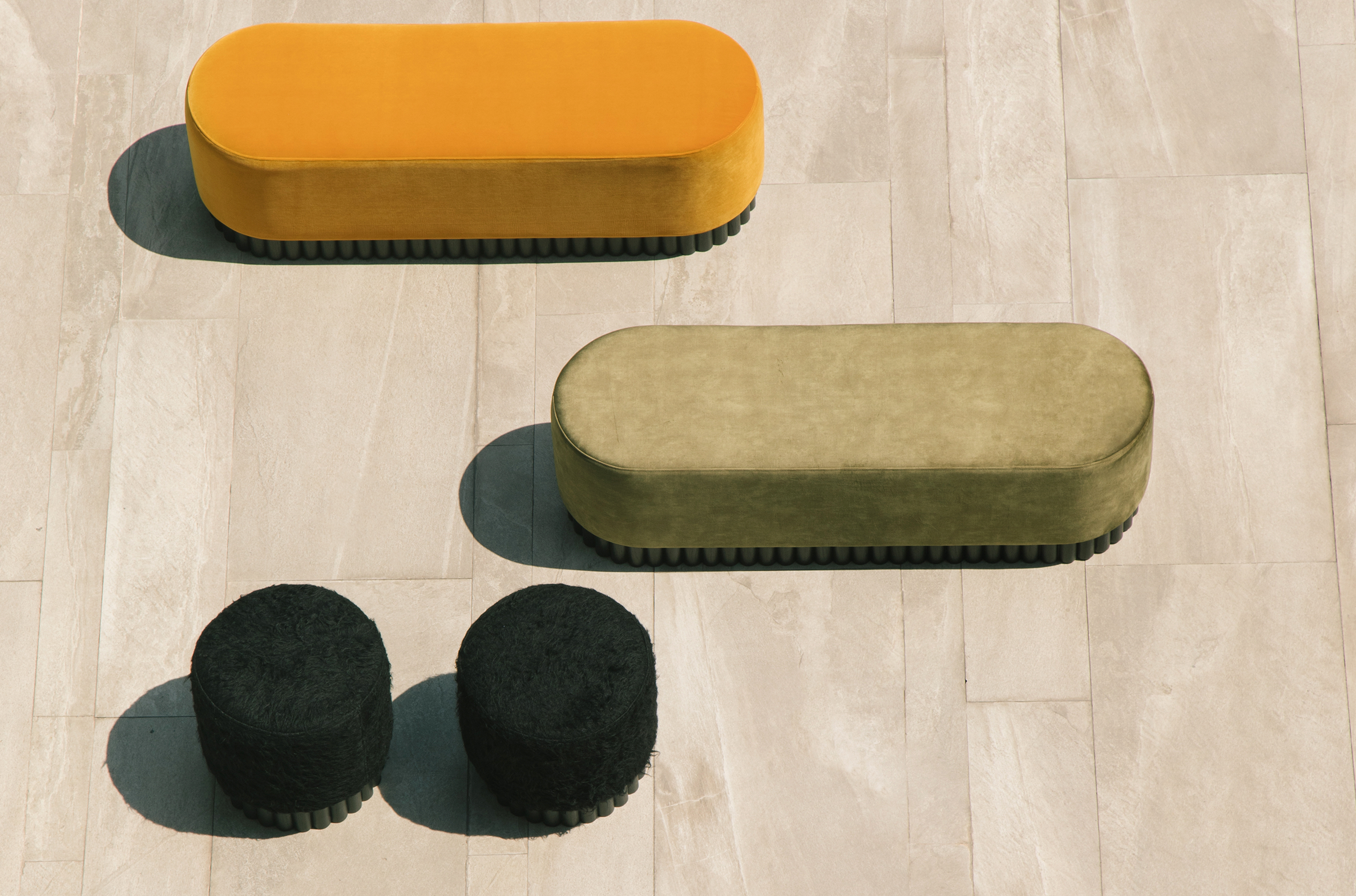
VLB: What we discovered is that working with patinas and metal that gets treatment for texture is really fascinating to us and we want to work with that more. One material that I didn’t expect to be so interesting to work with was leather. It’s one of those materials that will age with you, and that’s why we love it so much. We started doing all the upholstery for our benches and our seating in hair-on-hide, which is also called ponyhair. It used to be very ubiquitous in mid-century furniture and I think it was very surprising how much more interesting it is as upholstery than fabric. It has a warmth and character to it. You can literally see the scars on what used to be the skin of an animal, and I think it’s beautiful to celebrate that. And there’s an interesting contrast that arises between the matte stone and a much more reflective, lush hair-on-hide. But this is a process for us as well – working with these materials, being in the studio grinding and welding, is something that constantly changes our trajectory altogether. We are trying to be loyal to the materials but also figuring out how far we can push them.
NH: We want to play with what we can do to the stone. You can literally melt it, you can polish it past the point where you thought you could. We want to cast metal so that it’s full of impurities and looks like the rock itself, and then polish it back. With our next collections, we want to play with the full spectrum of textures in the same piece, so that it’s almost like gymnastics. The metal shows you how it starts off as an ugly collection of minerals that gets purified into something else. And same thing with the stone – it’s not just a rock from the earth but that you can push it to become a beautiful, polished thing that comes from a very humble origin.
AV: How do you conceptualize design’s ability to create ritualized spaces and moments of deliberate living?
VLB: One of the people who we are really inspired by is Lee Ufan, a Korean artist who has been based in Japan, part of a movement called Mono-ha. His work is very minimal, and he talks about the impact of objects in art and encountering objects in spaces. What we take from it is that objects – in our case furniture pieces – are objects in space that you encounter on a daily basis and that interrupt and change your flow. For example, a console or a table has a function but it’s also a function that you can select and project onto. You can change it over time. It becomes your personal space to either put your keys or incense. So we really think about how you encounter an object and we try to specifically disrupt the flow a little bit so that you can create those unexpected moments. I think it’s really important to disrupt behaviors a little bit.
NH: There’s a part of our pieces that we design and then there’s a part that we leave open for people to interpret. I want you to be inspired. If you’re a smoker, I want to make you a beautiful ashtray. I want to make you whatever your thing is, whatever we can do to help that moment in the most ceremonial way I can. And there’s a part of our work that is hyper-functional and then there’s the part of it that shows that we’re romantics. When we started this project, we were imagining spaces and moments that were more art-centric spatial experiences. For us, furniture was and continues to be the way into the curation of an entire atmosphere. You combine enough things that have an atmosphere of their own and suddenly you’re like, “Wow.”