CULTIVATING EXCHANGE: OMA’S MUSHROOM PAVILION AT CASA WABI
Photography by Rafael Gamo
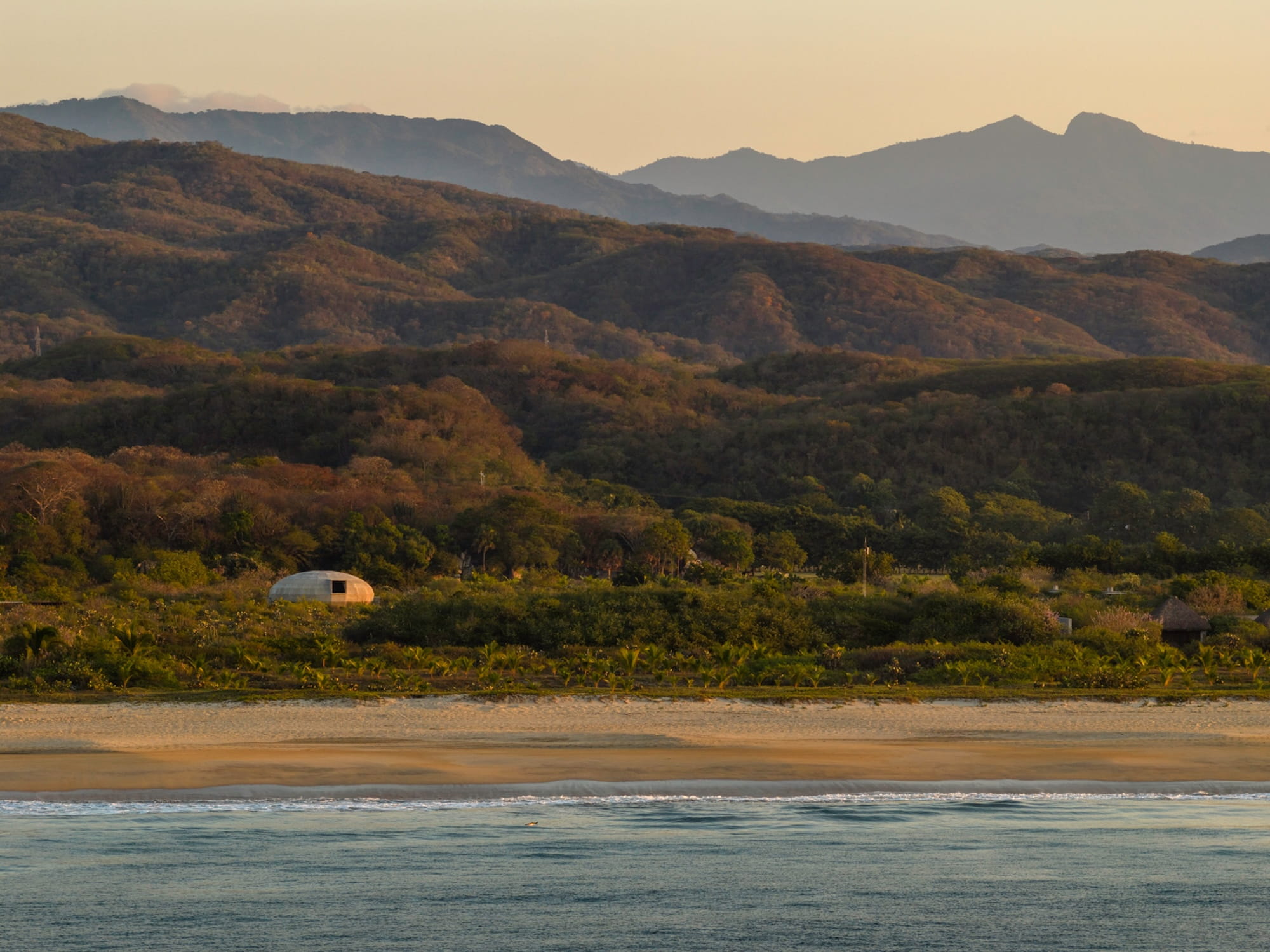
Set within the coastal landscape of Oaxaca, the Mushroom Pavilion by OMA, the international architecture practice, brings a typically unseen process into view. Conceived for the cultivation of mushrooms, the project shifts growth from something hidden to something shared, unfolding through time, observation, and care.
This is OMA’s first built project in Mexico, led by Shohei Shigematsu, Partner at OMA and Director of the firm’s New York office, in collaboration with Fundación Casa Wabi. Founded by artist Bosco Sodi, the foundation operates between art, community, and landscape, shaped by a philosophy that draws from both Mexican and Japanese traditions. Within this context, the pavilion moves between specificity and openness, a working system that also holds space for gathering.
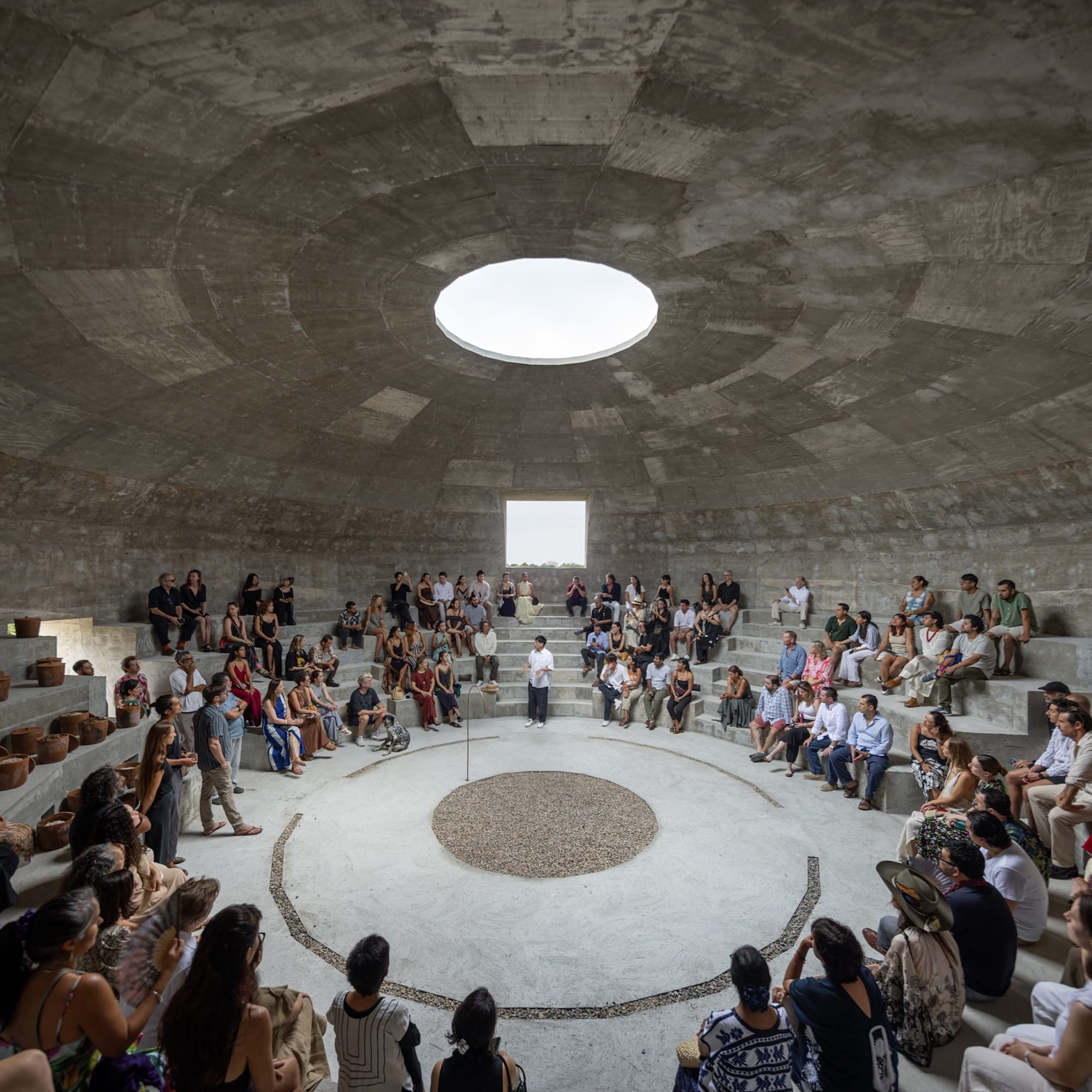
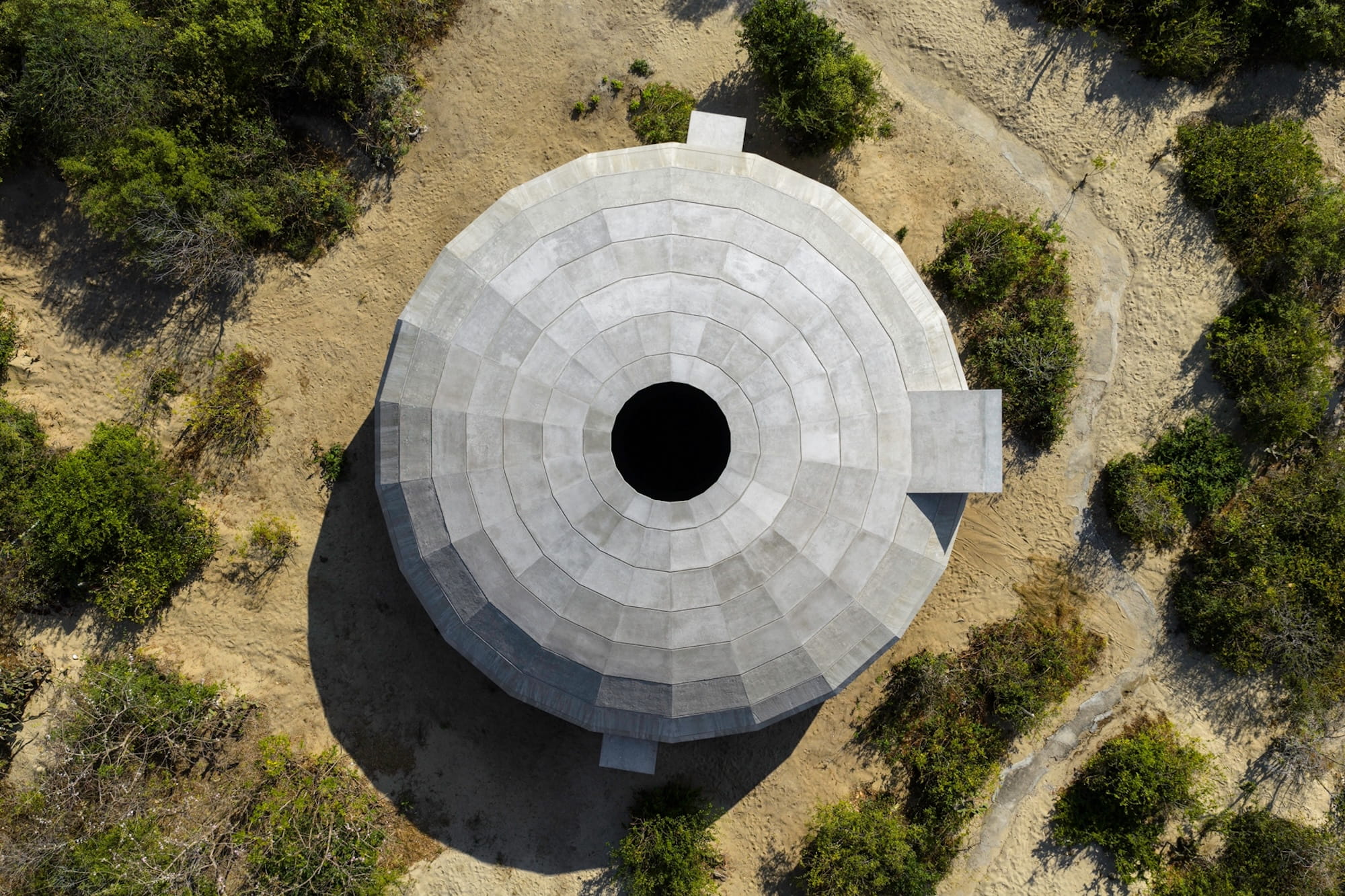
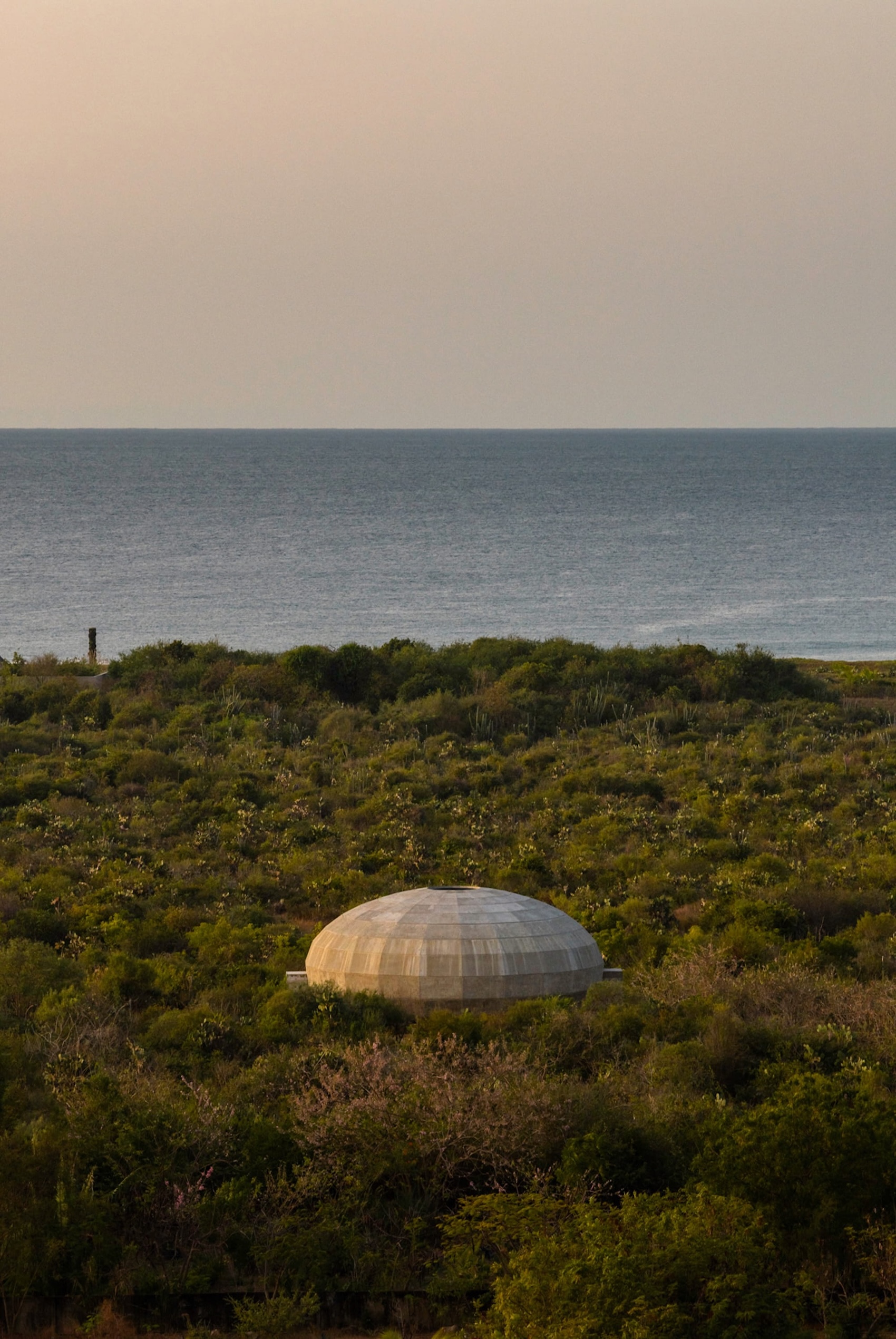
An elliptical form settles lightly into the terrain. Inside, a stepped interior and central oculus create a quiet choreography of light, air, and movement. The space supports cultivation while remaining open to other uses, from conversation and learning to performance and pause. Materially, the pavilion resists fixity. Its surface weathers, its interior adapts, and its role expands over time.
Rather than a singular architectural gesture, the pavilion operates as a framework, one that accommodates change, use, and collective presence. Its openness is not only spatial but temporal, allowing the building to evolve alongside the rhythms of cultivation and the activities of those who inhabit it. In this way, the project positions architecture not as a fixed object, but as an ongoing condition shaped by environment, material, and community.
Sarah Len: This project begins with something highly specific, mushroom cultivation, yet unfolds into a space for gathering and exchange. What initially drew you to this program, and how did you hold both precision and openness within the same form?
Shohei Shigematsu: We were interested in this specific, idiosyncratic program because of its potential to bring people together in an unconventional way. We accommodated both mushroom growth and other functions, such as formal and informal gatherings, by designing a flexible interior.
SL: The pavilion reveals a process that is typically hidden, slow, and underground. What drew you to make this cycle visible, and what does that shift in visibility allow?
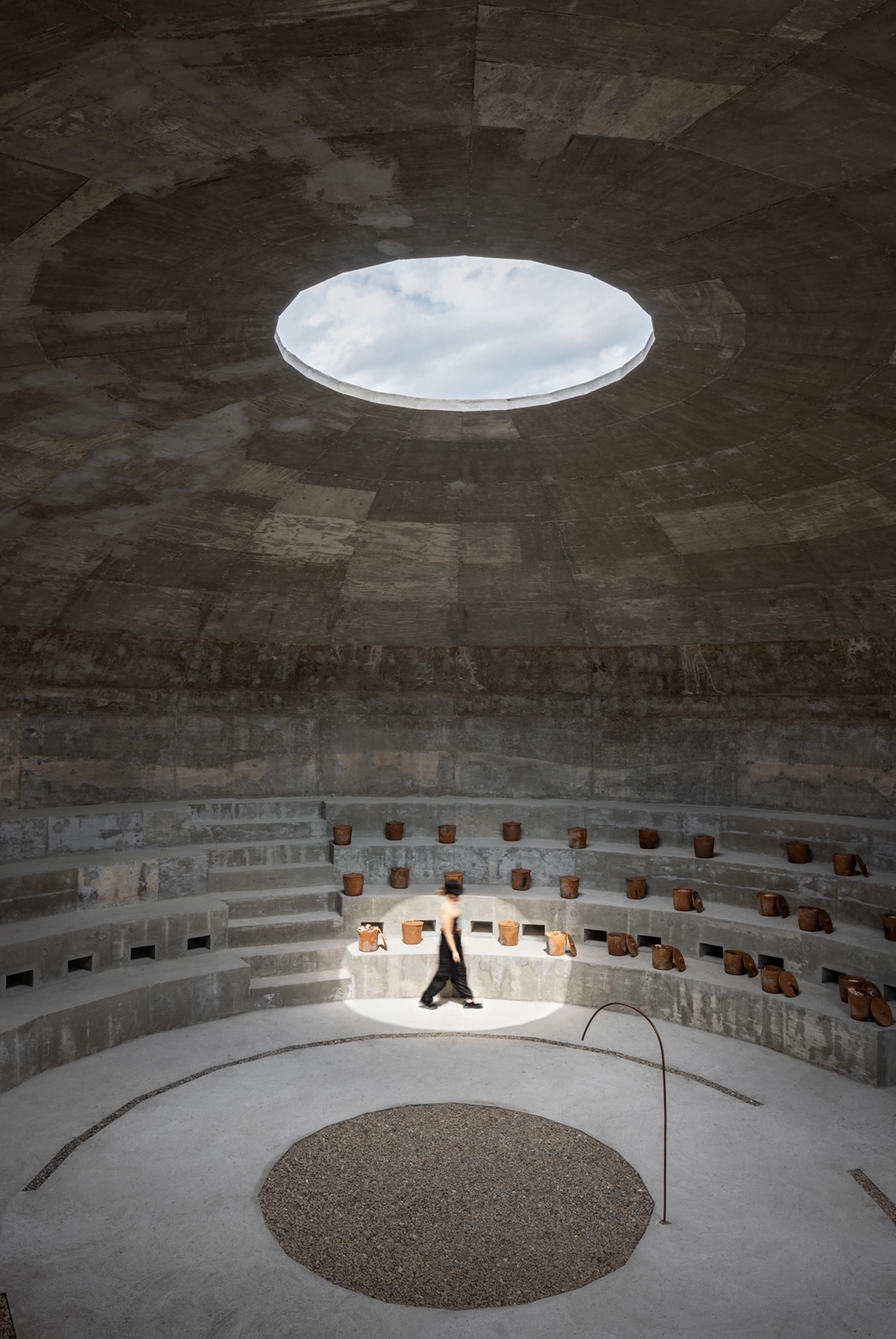
SS: Allowing people to observe different stages of the mushroom cultivation process from a single vantage point makes it easier for staff to monitor the status of each specimen. It also supports the foundation’s educational ambitions. Visitors gain a clearer understanding of the distinct growth stages and can compare how different species develop.
SL: This is OMA’s first built project in Mexico. What attracted you to working in this context, and what did you take away from engaging with a place as culturally and materially rich as Oaxaca?
SS: We were drawn to the foundation’s surroundings, which we emphasized by creating an upper-level viewing portal that looks out over the brush and ocean. Casa Wabi’s synthesis of techniques and materials, informed by both local Indigenous cultures and Japanese traditions, presented compelling design opportunities.
“No building is ever truly complete. Architectural ideas are only tested when they encounter the realities of daily life. The gradual transformation of the pavilion calls attention to this condition.”
— SHOHEI SHIGEMATSU
SL: At its center, the oculus opens the space to the sky, bringing in light, air, and time. How did you think about the sky as a presence within the architecture?
SS: Opening the interior to the sky was part of a broader effort to bring the environment inside. By welcoming multisensory stimuli such as wildlife sounds, nearby smells, and shifting landscape colors, we aimed to create a space that feels deeply enmeshed with its surroundings.
SL: The circular geometry and stepped interior suggest a shared orientation, almost ritualistic. What kinds of collective behaviors did you imagine the space might hold?
SS: The stepped perimeter doubles as seating for events and informal gatherings. In addition to mushroom cultivation and observation, the pavilion can host classes, performances, talks, exhibitions, or simply people watching the movement of the sun.
SL: The materiality embraces change, with the concrete designed to weather and evolve over time. What does it mean for you to design something that continues to transform beyond completion?
SS: No building is ever truly complete. Architectural ideas are only tested when they encounter the realities of daily life. The pavilion’s gradual transformation calls attention to this condition. Its internal climate will need to be continuously adjusted to support different stages of mushroom cultivation, and the interior will be reconfigured over time to accommodate evolving uses.
SL: The terracotta vessels made by local artisans sit within a precise architectural system. How did you think about the relationship between craft and structure?
SS: Craftsmanship was essential at every scale, from the pavilion itself to the terracotta vessels. The remote site limited the use of heavy machinery, so much of the construction was carried out by hand. Concrete was mixed, poured, and troweled on-site. Inspired by Casa Wabi’s ethos and local traditions, a burlap texture was stamped onto the exterior. Over time, this surface will weather unevenly, responding to rain and moisture. Inside, mushrooms grow in handcrafted terracotta pots made by local artisans.
SL: When you return to the pavilion years from now, what would you hope has changed, and what would you hope has remained?
SS: We hope the pavilion integrates seamlessly into and expands the foundation’s operations. Beyond its intended program, we look forward to seeing it host activities we could not have anticipated.