IN THE MYCELIUM-LED MONTERR LABORATORY & STUDIO, THE FUTURE IS SPROUTING FROM THE PAST
Photography by Fabián Martínez
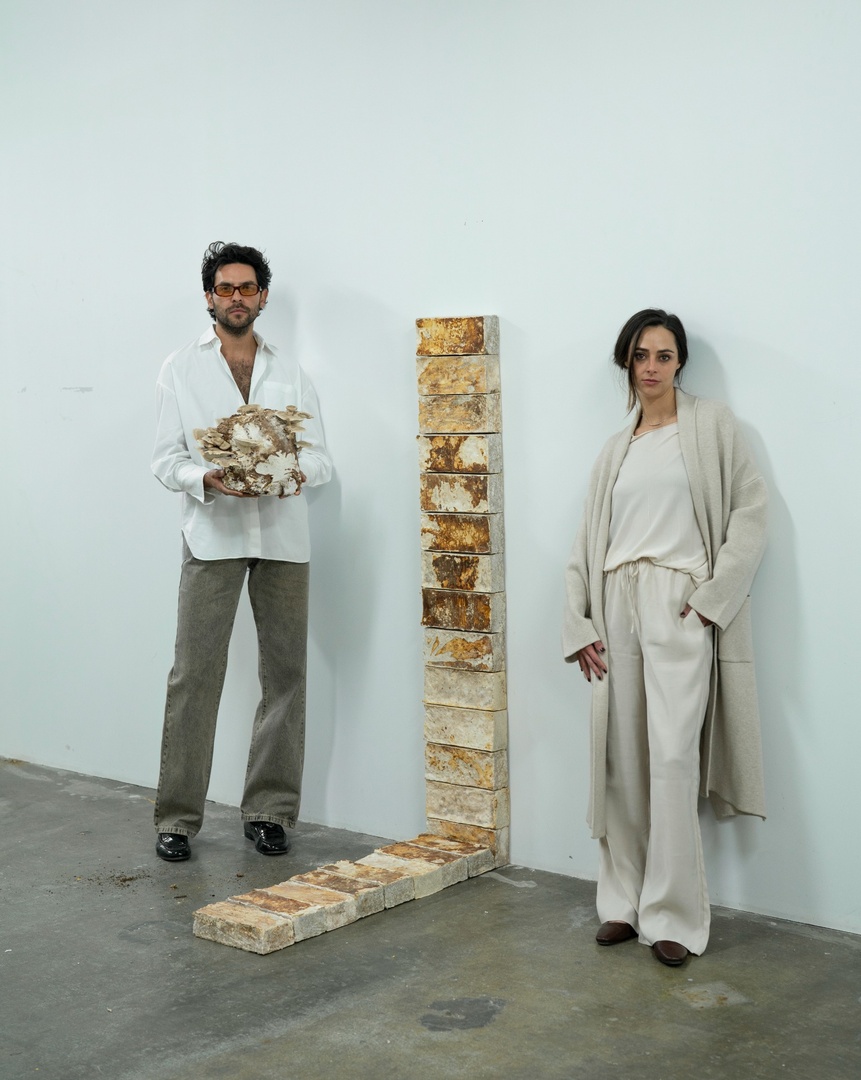
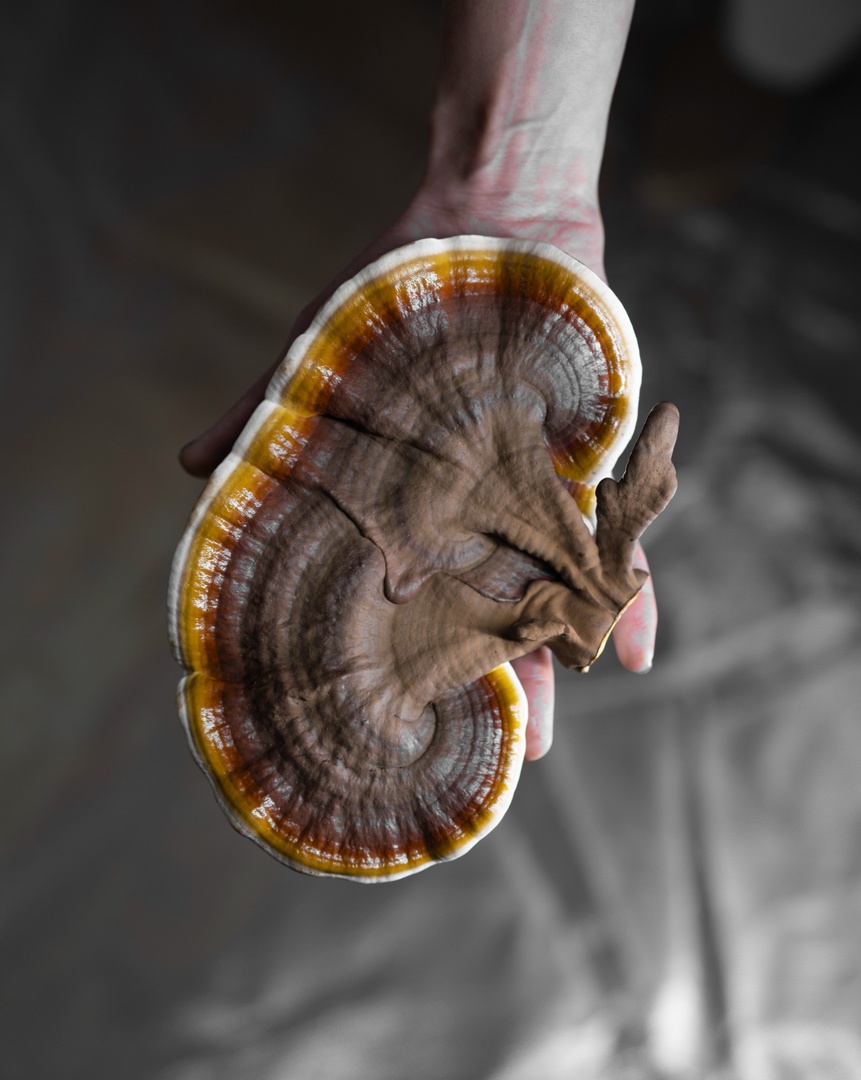
Earth is filled with miracles, a complex macrocosm that has long offered solutions to human problems, ready to use, to be discovered, or to be replicated. Fungi is one of these miracles, appearing billions of years before animals and plants. More than a biological system, it is a form of material intelligence, a living knowledge that informs how matter grows, connects, and transforms.
Over centuries, fungi have evolved into thousands of iterations, communicating through mycelium networks and leading to everything from mushrooms and fermentations to organic regeneration and medicine. Penicillin, for example, comes from a fungus. In this sense, fungi is not only a resource but a collaborator, shaping how we imagine the future of design and building.
In recent years, fungi has drawn a new generation of advocates who see the future embedded within this ancient intelligence. Across disciplines, designers and architects are looking to living systems not just for inspiration, but for instruction.
Among those seeking new solutions is Monterr Laboratory & Studio in the heart of Mexico City.
Monterr was founded by Federico Herrera and Maria Monteys in 2020, with its laboratory and studio opening in October 2025. Their story, however, began years earlier when they met in college studying industrial design. Federico recalls with a laugh, “Of course, as a gay man, I was in love with a beautiful and brilliant woman.”
Maria’s longstanding interest in nature led her to landscape design and early research into mushrooms as a material, while Federico’s path through sustainable design led to interior work and eventually to founding his art and design gallery in Tulum, SUMA, focused on consciously driven work. Their first collaboration came through a SUMA commission to present 14 mycelium artworks by Maria during Zona MACO. The success of the project revealed the potential in what they were co-creating and raised a deeper question about the intelligence embedded within materials.
The next step was clear: a laboratory and studio where those possibilities could expand.
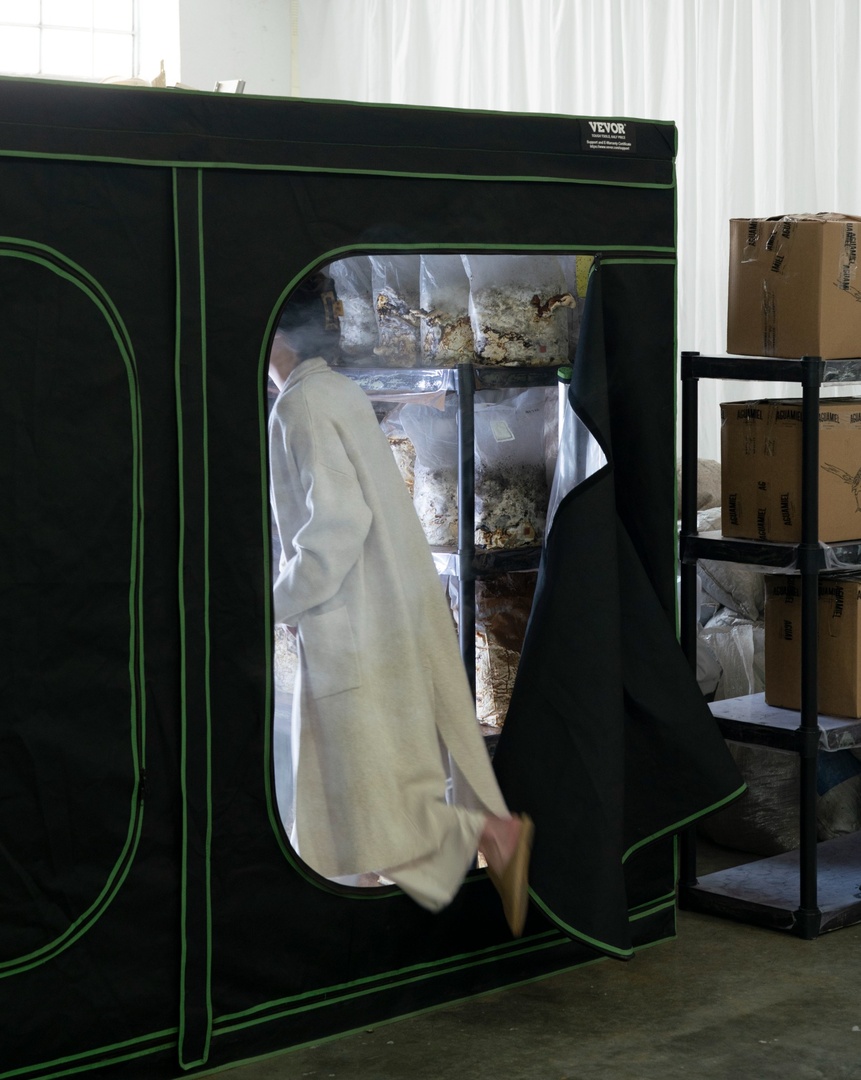
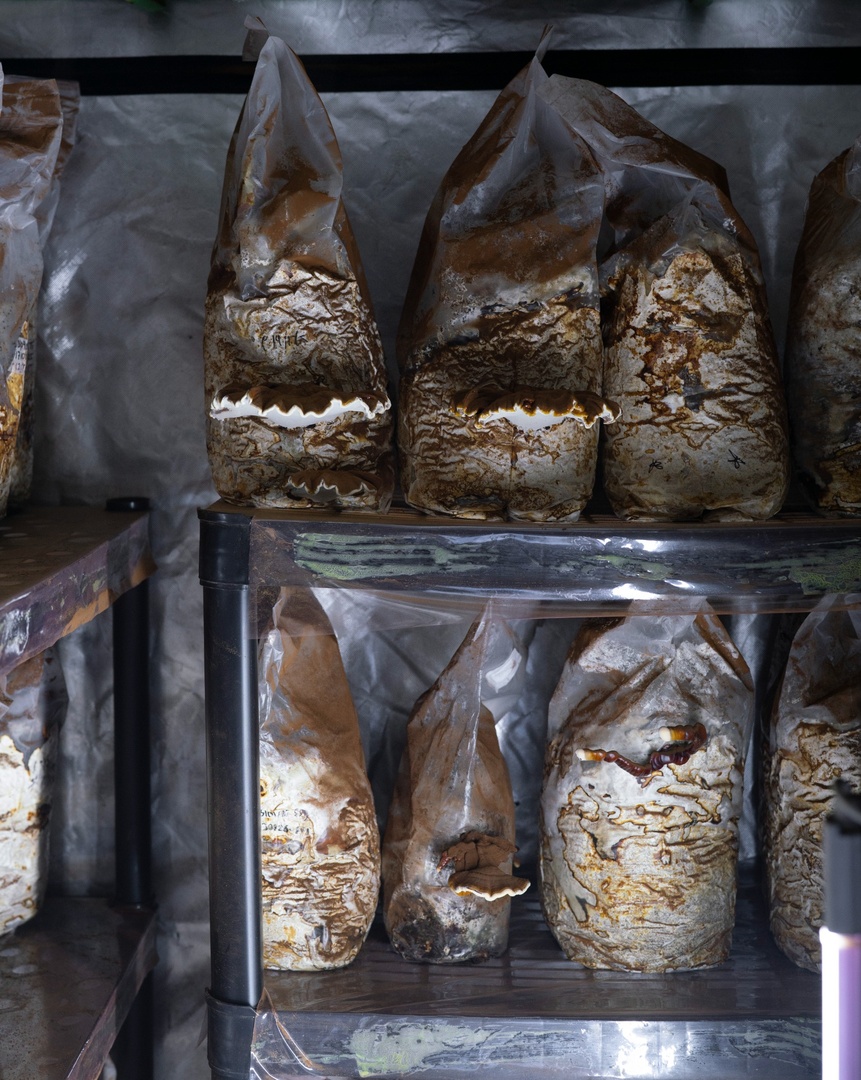
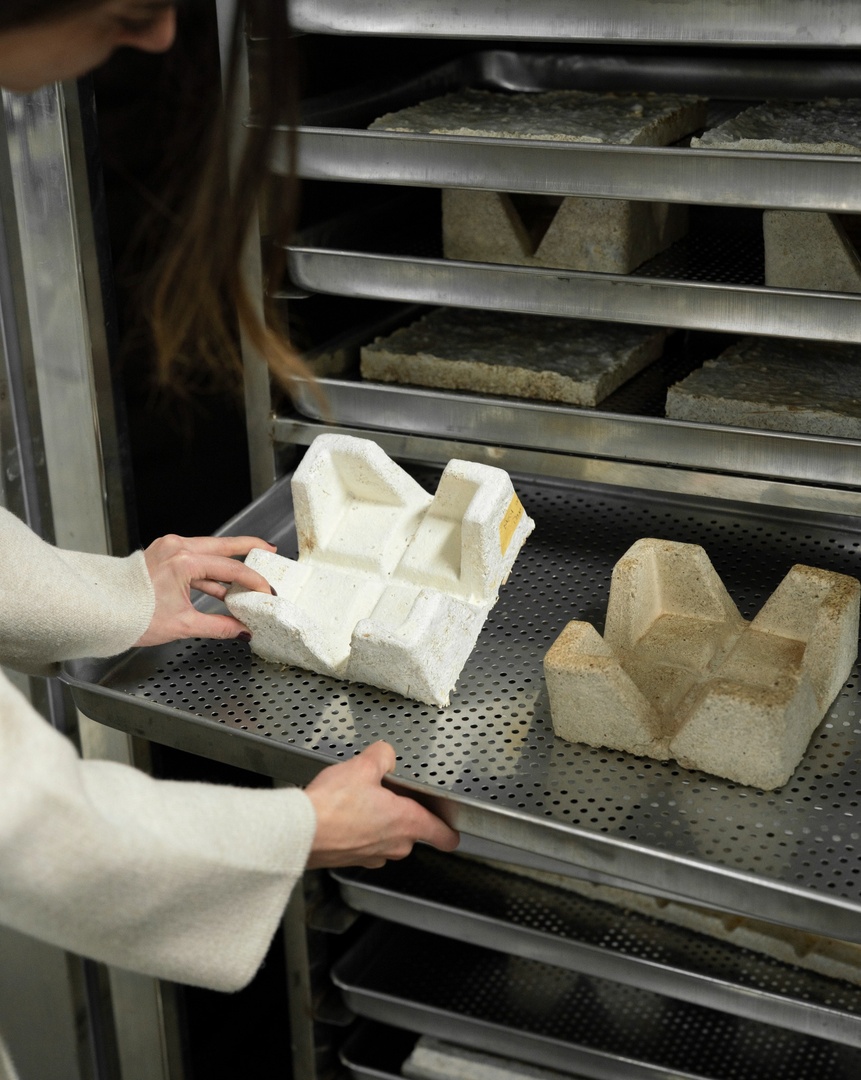
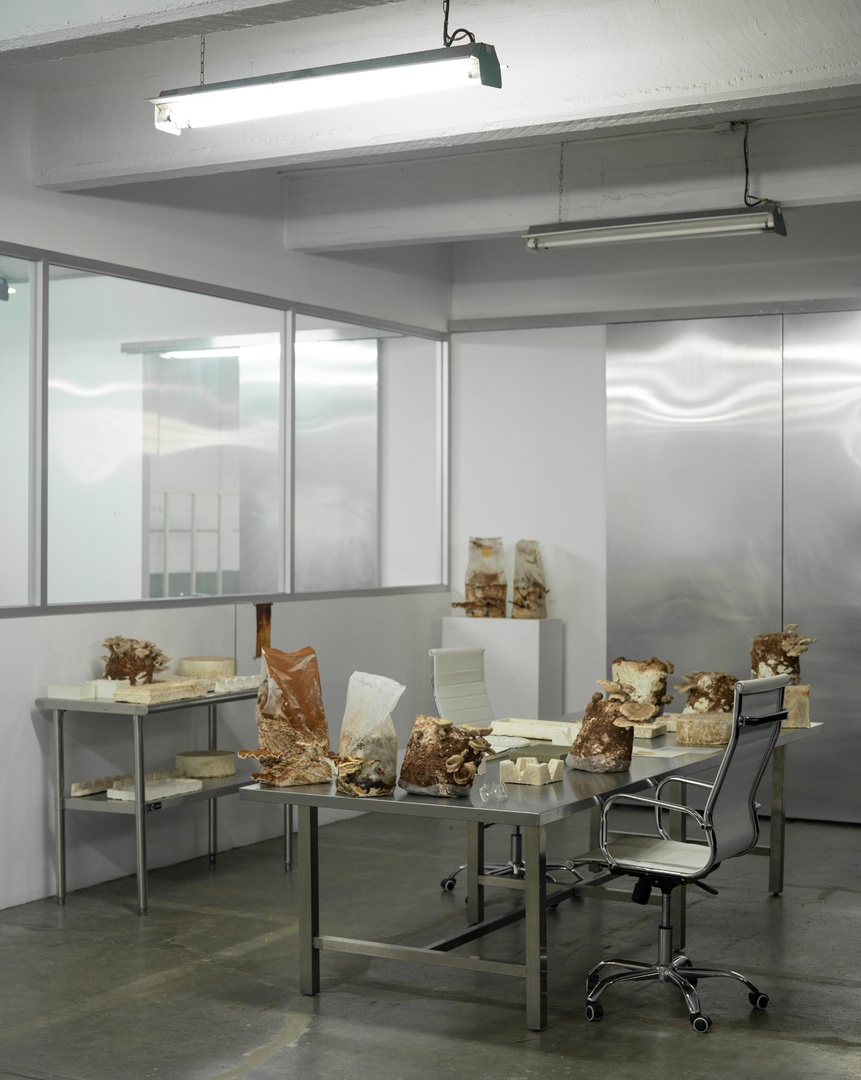
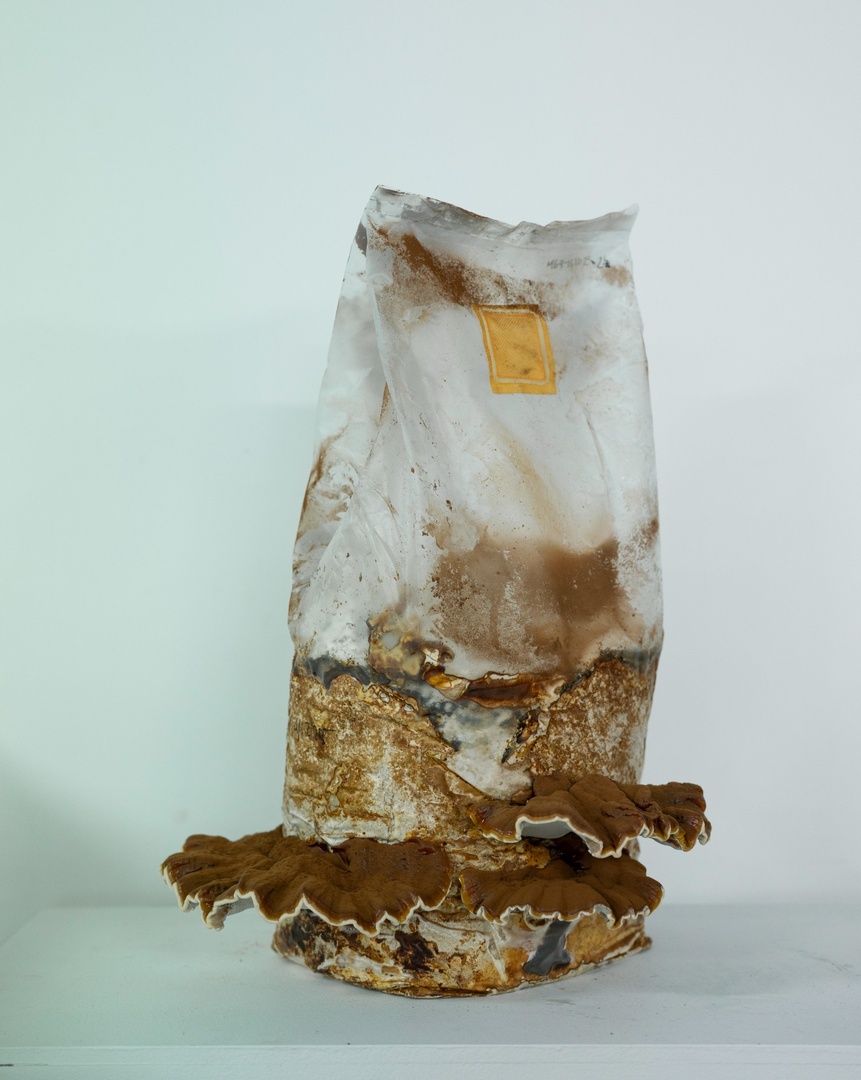
Walking through the lab, Federico and Maria show their complex machines, some designed by Maria, along with humidity and temperature regulated rooms where mushrooms grow, and a design space displaying their mycelium creations. Standalone bricks, a chair and bed base, a lamp with a mycelium leather shade, sturdy packaging prototypes, and early sculptural iterations sit in quiet dialogue. Each object reads less as a finished product and more as evidence of a conversation between designer and organism.
In an insightful and laughter filled conversation, the minds behind Monterr reflect on the past, the present, and, most compellingly, the future. A future in which materials are not inert components but active participants in how we shape space, industry, and everyday life. Ana Velasco, contributing editor for Materia Magazine, sat with Federico Herrera and Maria Monteys at Monterr Laboratory & Studio in Mexico City to discuss their work, process, and the evolving intelligence of living materials.
Ana Velasco: Monterr started from an artistic collaboration. For you, was the interest artistic or more scientific?
Maria Monteys: It was more scientific and design focused. It began as my thesis, exploring the possibilities of mycelium as a material. That was my first entry point, and then I became fascinated by its beauty and its processes. That is how we started to understand it more deeply. It is really a collaboration, you have to adapt to the organism and it has to adapt to you, a process that reveals how material itself can guide the direction of design.
Federico Herrera: We connect to mushrooms very easily, so we now call ourselves mycologists because we have been learning and studying so much. Every mushroom is different and has its own personality. They have specific needs, different temperatures, humidity levels, lighting, and supplementation. Just like us, they respond to their environments, showing that materials are not inert but responsive and intelligent.
MM: We believe design, architecture, and especially consumption culture have to change. At Monterr, that is what we are aiming for. We have to create solutions as designers, architects, and as a packaging industry. For example, our packaging replaces styrofoam, one of the most toxic forms of plastic. Its molecular chain never really ends, it only becomes smaller over time. We now have microplastics in our blood. That is the relationship we want to change through design, shifting away from single use materials with infinite impact toward materials that regenerate, decompose, and reenter natural cycles.
AV: What was happening behind the scenes during the years leading up to the public opening in October?
MM: A lot of research. There were many things to figure out, formulations to make it competitive in terms of time and efficiency, research to create coatings and finishes that the mushroom itself provides. We conducted extensive investigation to reach an optimal material. And there was also the process of building the space itself.
FH: The machines, the rooms we needed, the temperature room, the humidity room, the ovens, the protocols. The laboratory and all its systems must be maintained under strictly sterile conditions to ensure the safety of our mushrooms. Any bacteria or other fungi, such as Trichoderma, can contaminate and damage the product. We also had to study the market. It is not easy to enter an established industry and present an alternative made with mushrooms, especially when the material challenges assumptions about durability and value.
MM: After all this investigation, we started with art and experimental objects. The next step was to make it industrial, to create a product with a consistent production line and reliable results. Because it is a living organism, finishes vary, but standardizing the material and process became the culmination of that cycle, a way of translating living intelligence into systems that industry can adopt.
AV: There are other proposals in the world offering mycelium based solutions to packaging, medicine, food, and design. But what sets Monterr apart, particularly in Mexico, where mushrooms have a deeply rooted cultural history, is the integration with design. Aesthetics do not need to suffer for ecological solutions. When did this become part of the mission?
FH: From the very beginning. That was always the seed.
MM: In Mexico we are often a step behind in recognizing the value of design and the values embedded within it. With this new material, it is also a challenge to open a new interest and a new understanding of what design can be.
FH: The seed was also curiosity about the beauty of mushrooms and the knowledge they hold. After experimenting, we realized what we could achieve and that we could scale it in a meaningful way. There are mycelium based products already, boats, coffins, houses, bricks, pavilions, architectural applications. Now we have interior finishes as well, leathers, car interiors. The possibilities are endless, because the material continues to teach us how it wants to be used.
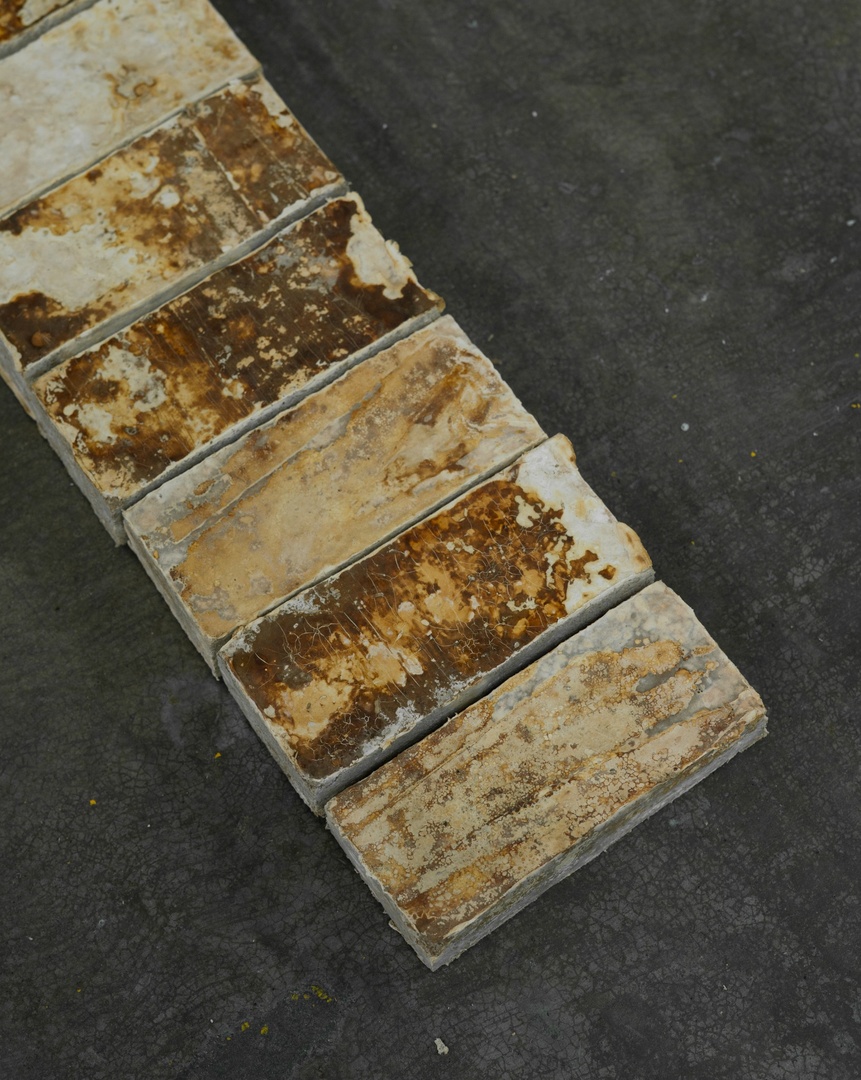
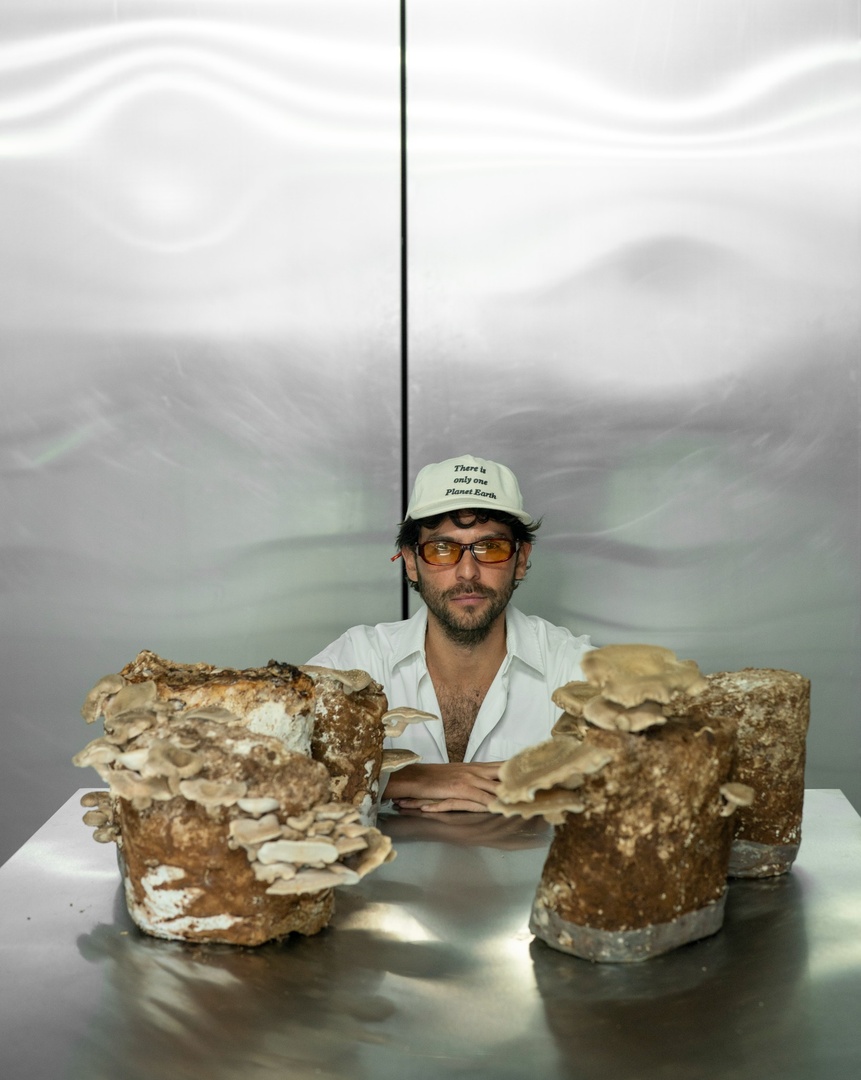
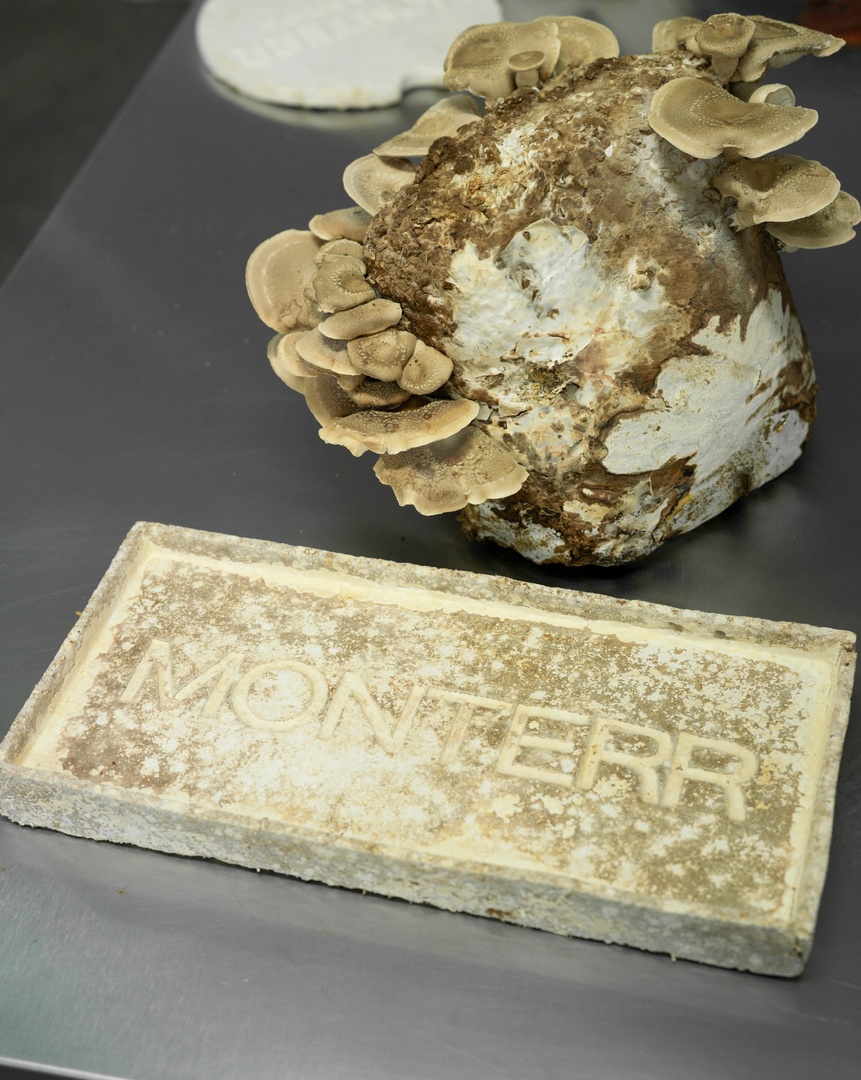
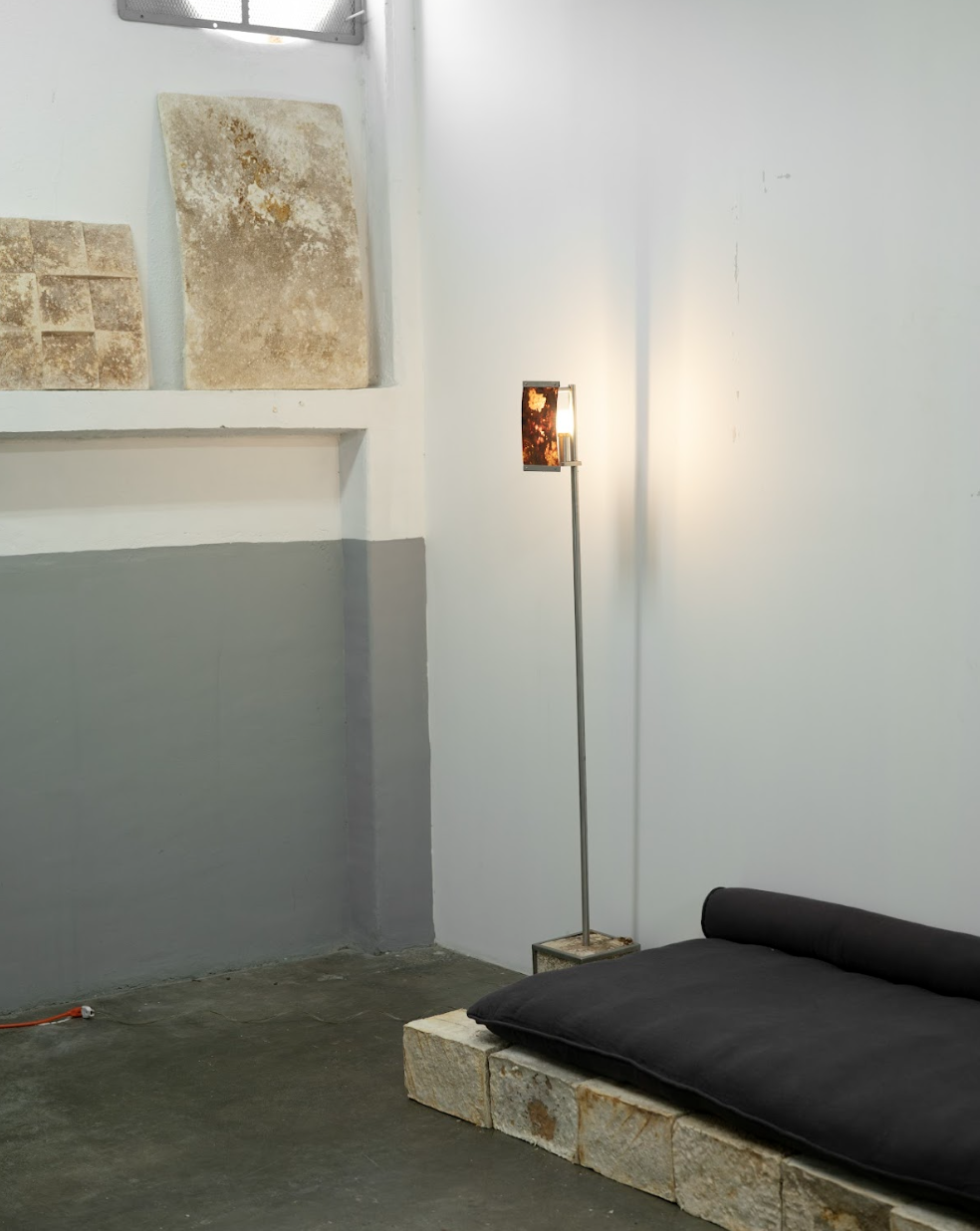
AV: You spoke about the bricks. One thing that interests me is that they are temperature regulating and fire resistant. I am curious about their potential as an alternative building block, especially as fires worsen globally. Is it possible to create housing entirely from biomaterials?
FH: Yes. In the United States they are already building houses using mycelium as part of layered systems. The material sits within a sandwich of components to optimize its properties. If exposed constantly to sun and rain, it will biodegrade, because it is a living material.
MM: Unless the exterior is coated. In the future we will expand these possibilities, but right now applications in architecture are mostly interior, even when structural. It is an incredible option for interior environments because of its insulating properties, creating stable and efficient climates and reducing the need for air conditioning, allowing the material itself to regulate comfort.
AV: How does designing with a living material change your relationship to control, failure, and authorship?
MM: It is a collaboration, completely. It is a paradox. We are in a constant dance with the organism. We try to guide it, but it also has its own expression. Even though we use industrial systems to dictate shape and form, we started seeing that the organism responds to the parameters we set. Each piece becomes different. Even within the same process and material, you achieve unique physical outcomes because the organism is alive. You have to understand it. With inert materials, you do not need that relationship. Here, science and design meet, and it becomes both a challenge and a reward to work together.
AV: And that is the magic of mycelium, that it is a network. It thrives through collaboration.
MM: Exactly. It carries information. Fede and I always say that in gathering and sharing this knowledge, we become part of that network as well.
AV: What is something about fungi that you love that people may not know?
MM: They are misunderstood. People often associate fungi with illness or decay, but they play a crucial role in nature. They renew matter and sustain cycles of life. I love their processes, their beauty, how they grow, expand, and move while alive.
FH: They carry ancient knowledge. They have been here since the beginning of Earth’s history. I have experienced ceremonies with mushrooms that allowed me to connect deeply with them and see new ways of living. It is medicine. It is a matrix that can heal. If it can help heal the world, it can help heal us. As designers, we have a responsibility. If we create trash, the world fills with trash.
AV: In many conversations at Materia, designers speak about creating with connectivity rather than ego. Biomaterials seem to embody that philosophy.
FH: Definitely. It is a need of the material as well, because it is alive.
AV: You have worked with many materials before. How has mycelium changed your design practice?
FH: It opened many possibilities. I have always tried to work on projects with a sustainability focus. With Monterr we began with packaging, but then realized we could do much more. We can make houses, interior finishes, and architectural elements. Right now we are working on a music studio because mycelium is soundproof. For another client we are designing a meditation room where the walls, floors, and furniture will all be made from mycelium.
AV: What is the biggest challenge you face in scaling production?
FH: Financial. The research is complete. We built this project ourselves, and we are ready to scale, to double or triple production. Our packaging materials are already prepared for that.
AV: Investors welcome. Who are your heroes in the world of fungi?
MM and FH: One, two, three. Neri Oxman.
FH: And also Paul Stamets and Philip Ross.
MM: Eben Bayer, who founded Ecovative. They showed that this could scale.
AV: Replacing pollutants and single use materials with biomaterials comes with many challenges. Even though it is ancient, it is also emerging. What does the path toward widespread acceptance look like?
MM: In ten years, society will be much more open to biotechnology and biomaterials. People and industries are already searching for ecological solutions because the systems we rely on are no longer sustainable.
FH: Those industries are made for seconds of use and centuries of impact.
AV: Financial incentives often drive change more than environmental ones. How do you address that?
FH: At Monterr we match production costs for new clients. We work with people who share the intention of doing things better. We charge the same cost to transition from cardboard or plastic to mycelium.
MM: To build this industry, materials must be cost efficient, time efficient, and technically efficient. If we demonstrate those three things, change becomes possible.
AV: Who would be a dream collaboration for Monterr?
MM: Collaborating with Neri Oxman would be incredible. She has done so much research and shares the same vision.
FH: She is a pioneer of biomaterials. She works with bees, bioluminescence, mushrooms, shells, with nature itself. While technology is often defined by machines and AI, we like to say we work with the most ancient and powerful technology, which is nature. Her projects go beyond what most people imagine.
AV: I would love to see a collaboration between Monterr and a global brand like Coca Cola.
FH: That would be amazing. Once we develop the right technology for holding liquids, anything becomes possible.
AV: My last question. If you were a type of mushroom, which would you be and why?
FH: I would be psilocybe, because I am drawn to connection and to exploring other dimensions.
MM: For me, lion’s mane. It is soft, subtle, and feminine.
FH: She is the guardian of the woods. You are the guardian of Valle de Bravo. And both are beautiful.