PRESERVATION WAS THE PROJECT: MIKE FREED ON BUILDING POST RANCH INN
Photography by Mara Hoffman
It doesn’t take long to notice that Mike Freed tells the story of Post Ranch differently than most founders would.
Perched along the cliffs of Big Sur, Post Ranch Inn has become one of the world’s most celebrated destinations, recognized as much for the way its architecture recedes into the landscape as for the experience it offers. Yet ask Freed how it came to exist, and he rarely begins with the buildings.
Instead, he talks about Billy Post, whose family cared for the land for generations. He remembers architect Mickey Muennig living on the property, walking the land every day, and drawing the project by hand. He credits neighbors who believed the project could belong in Big Sur, artists who shaped its cultural life, and staff who have remained for decades. Throughout our conversation, he consistently redirects attention away from himself and toward the people who made Post Ranch possible.
The remarkable thing about Post Ranch isn’t simply that it was built in Big Sur. It’s that it was built with the trust of a community determined to protect it. More than thirty years later, that same commitment continues to define it.
In this conversation, Freed reflects on the relationships behind Post Ranch, the responsibility of stewardship, and why the places that endure are rarely the work of one person alone.
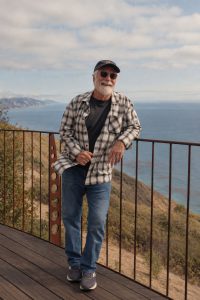
Sarah Len: You’ve often said that the first time you stood on the property you knew it was unlike anywhere you’d ever been. What did you see that made such an immediate impression?
Mike Freed: I first came to Big Sur in the early 1980s after a friend called and told me to get there as quickly as I could because he’d just seen the greatest piece of property he’d ever seen. At the time I was practicing real estate law, and I drove up expecting to look at one piece of land. Instead, I met Billy Post.
Billy’s family had homesteaded the property in the 1860s. We got to know each other, and I eventually spent two years helping solve the legal issues surrounding the land before I bought a portion of it and built a small cabin. More importantly, Billy became one of my closest friends, and through him I was welcomed into the Big Sur community.
When I walked the ranch with Billy, I realized there was a soul to the land. It wasn’t just the ocean views. Big Sur is where the mountains meet the sea, and there was something about that landscape that felt unlike anywhere else I’d ever been. What I saw wasn’t different from what anyone else would have seen. It was simply one of the most spectacular pieces of property in the world. But I also understood why Billy and his family had spent generations protecting it.
SL: Billy Post seems to have viewed the land less as something to own than something to care for. What did you learn from him about stewardship?
MF: Billy believed his family had been incredibly fortunate to care for that land, and he wanted other people to experience it. At one point another buyer came along and offered to purchase the property. We’d been working toward this project for several years, but nothing had been signed yet. Billy asked what I thought he should do. I told him I was a real estate lawyer, and if the opportunity was better for him, he should probably take it.
Instead, he turned the offer down.
Then he said, “Let’s do another option agreement.”
I asked him what he wanted.
He smiled and said, “Buy me a tractor.”
That was Billy. He cared far more about what would happen to the land than getting the highest price. His hope was that more people would be able to experience this extraordinary place while preserving everything that made it special.
SL: Every great project begins with finding the right collaborators. How did you first meet Mickey Muennig, and what convinced you he was the architect for Post Ranch?
MF: My first architects weren’t the right fit. Around that time I had an idea for a treehouse after visiting Tassajara Zen Mountain Center. I asked them to design one, and it looked more like a college dorm than anything that belonged in Big Sur.
An artist named Greg Hawthorne told me, “You’ve got to hire Mickey.”
I’d heard of Mickey but had never met him. I drove to his place on Partington Ridge and found what I thought was a tiny greenhouse. It turned out that was where he lived. His bed was on a platform, his drafting table underneath, and there was no indoor plumbing. There wasn’t much work for architects then because of the building moratorium, yet within minutes I knew I’d met someone extraordinary.
I asked him to design the treehouse, and two weeks later he came back with something completely different. I hired him on the condition that he work exclusively on Post Ranch for the next two years. During that time he lived on the property, walked the land every day, and drew everything by hand. I knew what I wanted the place to feel like, but Mickey understood the land in a way very few architects could. Every building, every path, and every relationship to the landscape grew out of that process.
SL: Looking back, what principles guided the way Post Ranch was built?
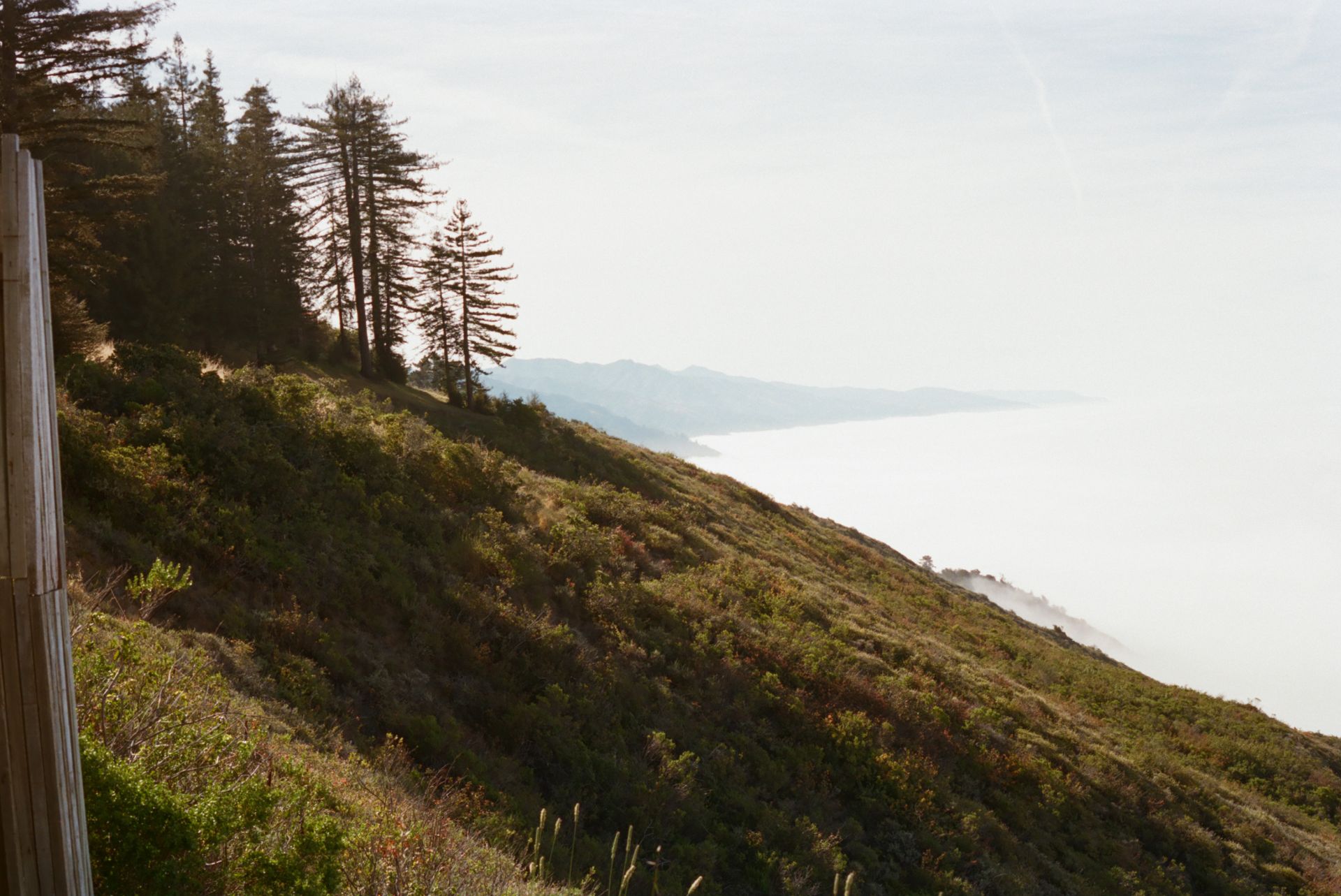
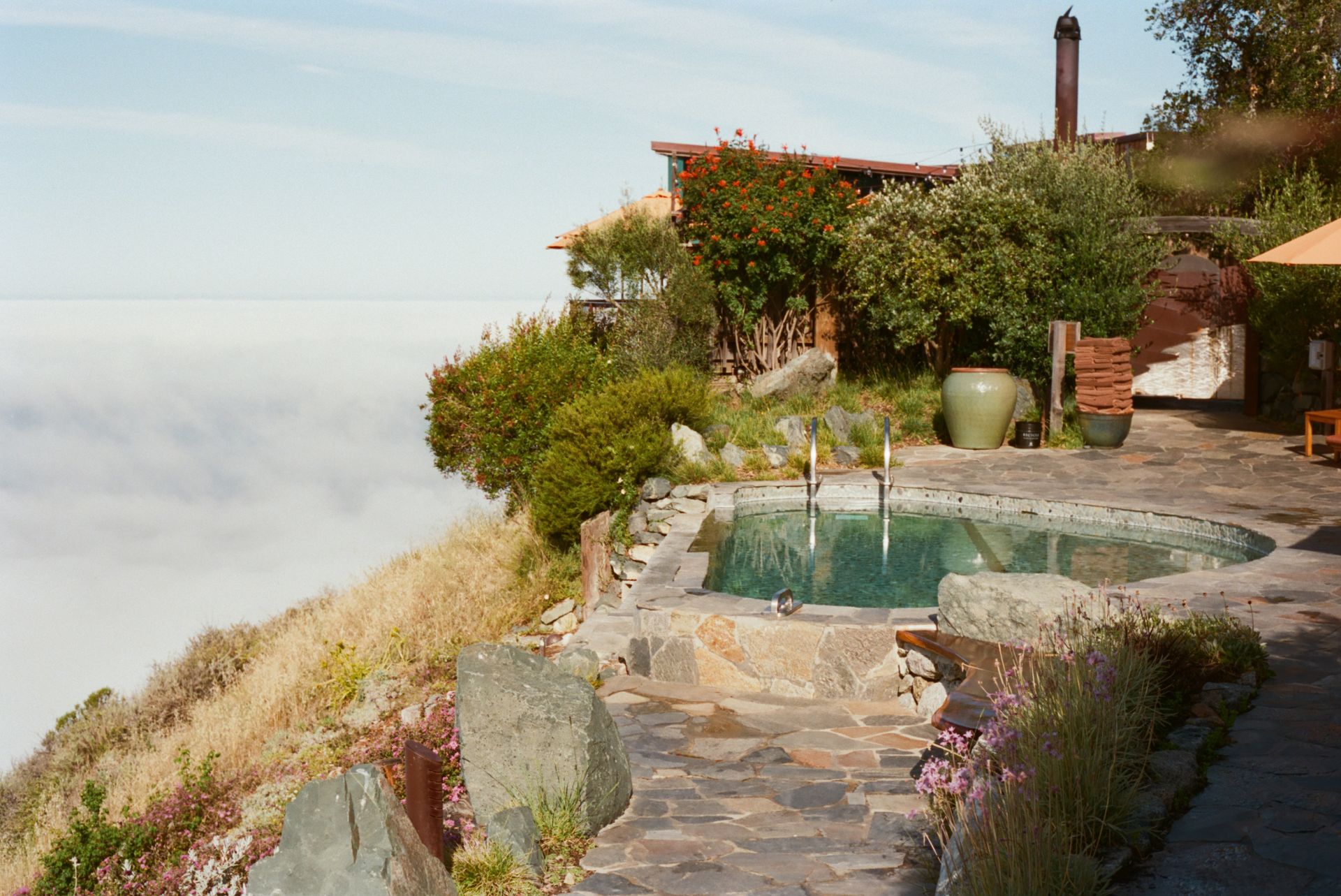
MF: The landscape came first. You have these extraordinary redwoods and oaks, so from the beginning the question was: how do we build without cutting them down?
Mickey designed the buildings around the existing trees and the contours of the land. In the end, we removed only one tree during construction, and that was because the county required it for fire access. We’ve planted more than a hundred since.
Preservation was never separate from the project. It was the project.
SL: Post Ranch was unlike anything being proposed in Big Sur at the time. How did you earn the community’s trust?
MF: When we started, most people thought the project would never be approved. Previous developers had concluded it couldn’t be done.
The difference was that this wasn’t an outside development team. Billy was from one of Big Sur’s founding families. Mickey was a local architect. Most of the builders were local. I’d already built a cabin there and had become part of the community. This was really the ultimate locals’ project.
We spent a tremendous amount of time talking with our neighbors, especially the people who would be most affected. We listened, we made changes, and we shared the same goal of protecting Big Sur. In the end, the project was approved unanimously, without an appeal. I think that happened because everyone understood we were trying to build something that belonged there.
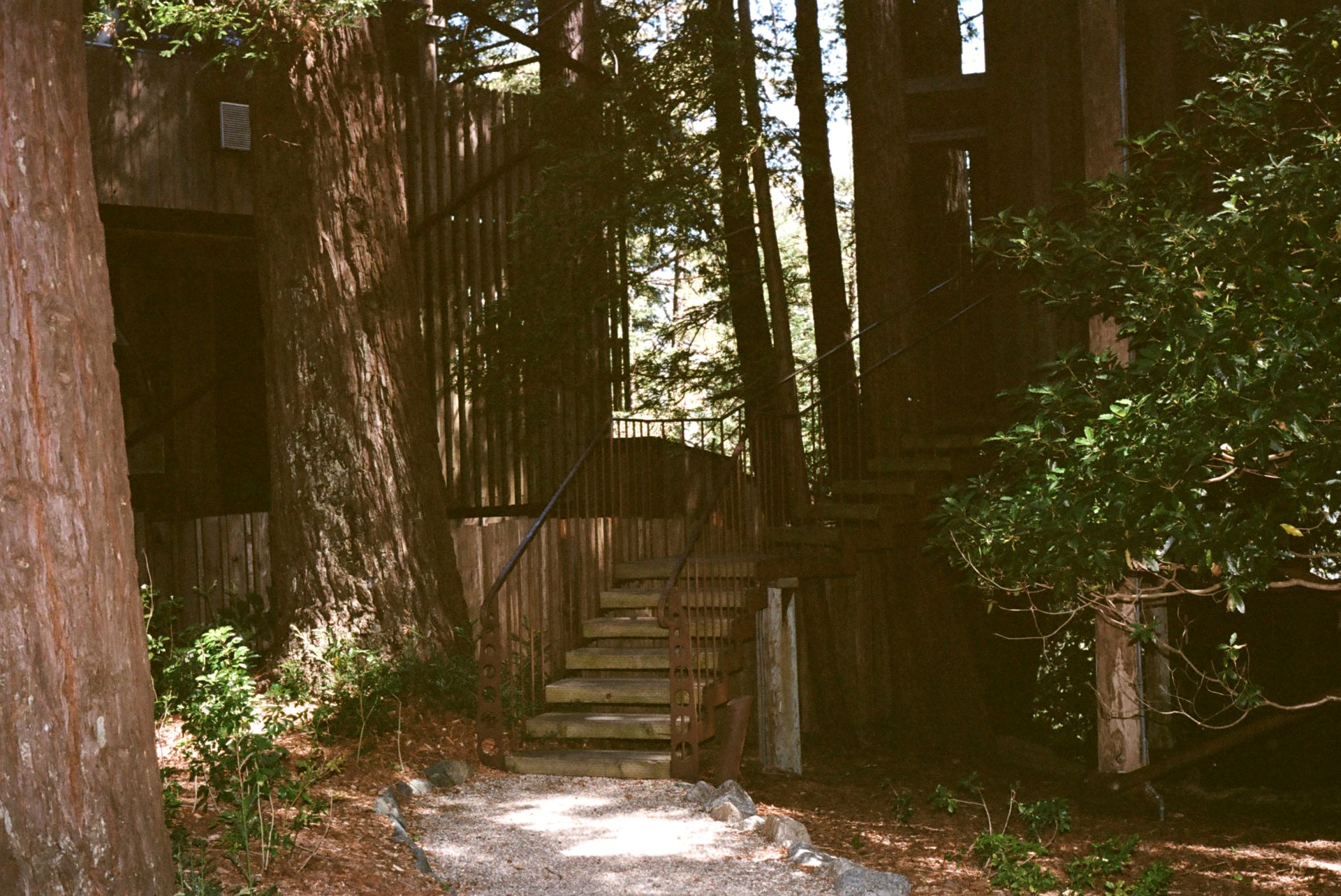
“The preservation mindset never stopped once construction ended. If anything, it’s become more important. Sustainability isn’t something you add to a project later. It has to shape every decision from the beginning.“
– Mike Freed
SL: What do you remember most about opening Post Ranch?
MF: Everyone told me it couldn’t be done. They said thirty rooms wouldn’t be financially viable and that we’d never get the approvals. We ignored that and focused on building the best project we could.
I originally planned to open on April 1, 1992. I figured if it didn’t work, I could always say it was an April Fools’ joke. Instead, we opened on April 9, eight days late and about $3,300 over budget. Looking back, that’s not too bad.
The real turning point came five months later when Travel + Leisure visited. They had originally planned a small mention, but the photographer called the editors and said this wasn’t just another hotel. It became the cover story. Overnight our occupancy jumped from around sixty-five percent to ninety percent. That was validation that people understood what we were trying to create.
SL: More than thirty years later, what has remained true?
MF: Preservation is still at the center of every decision we make.
Our restaurant received a Michelin Green Star, and we’ve been recognized as one of the most sustainable hotels in the world. But awards aren’t really the point. The point is asking, every day, how we can do better.
Every decision balances design, comfort, and sustainability. We think about indoor air quality, regenerative agriculture, healthier building materials, and ways to reduce our environmental impact.
The preservation mindset never stopped once construction ended. If anything, it’s become more important. Sustainability isn’t something you add to a project later. It has to shape every decision from the beginning.
SL: Artists have always been part of Post Ranch. Why was that important?
MF: Greg Hawthorne played a huge role in that.
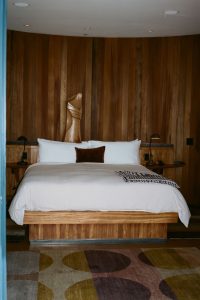
Greg told me early on, “Your place is special. Let’s feature local Big Sur artists.” That made complete sense because the landscape is already the greatest work of art. The show is outside. You don’t need paintings trying to compete with what’s beyond the windows.
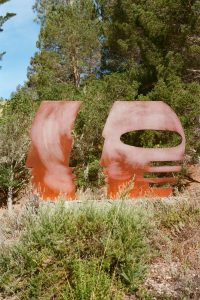
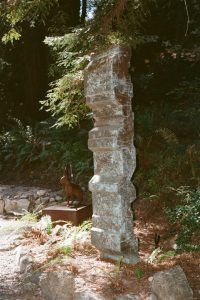
Instead, we focused on artists from Big Sur and the surrounding region. Greg designed the sculpture visitors see when they arrive. Trevor, one of our local artists, creates sculptures from recycled metal collected from the restaurant and around the property. We also work with local photographers and galleries because supporting the creative community is part of supporting Big Sur itself.
That’s also why we don’t have televisions in the rooms.
People sometimes ask why.
I tell them, “The show’s outside.”
When you’re surrounded by that landscape, I want people looking out the window instead of at a screen. That’s always been part of the experience.
SL: Many of the people who helped build Post Ranch are still here today. What has that continuity meant to you?
MF: It means everything.
Martin was one of the original builders. Today, his son, who was born on the property, is our operations manager. Many of the people who helped build Post Ranch are still here, and in some cases their children now work alongside them. That’s something I’m incredibly proud of.
From the beginning, we knew that if we wanted to care for this place, we also had to care for the people who made it possible. We built housing for our staff because living in Big Sur is difficult and expensive. We subsidize those homes because we want people to build their lives here, not just work here.
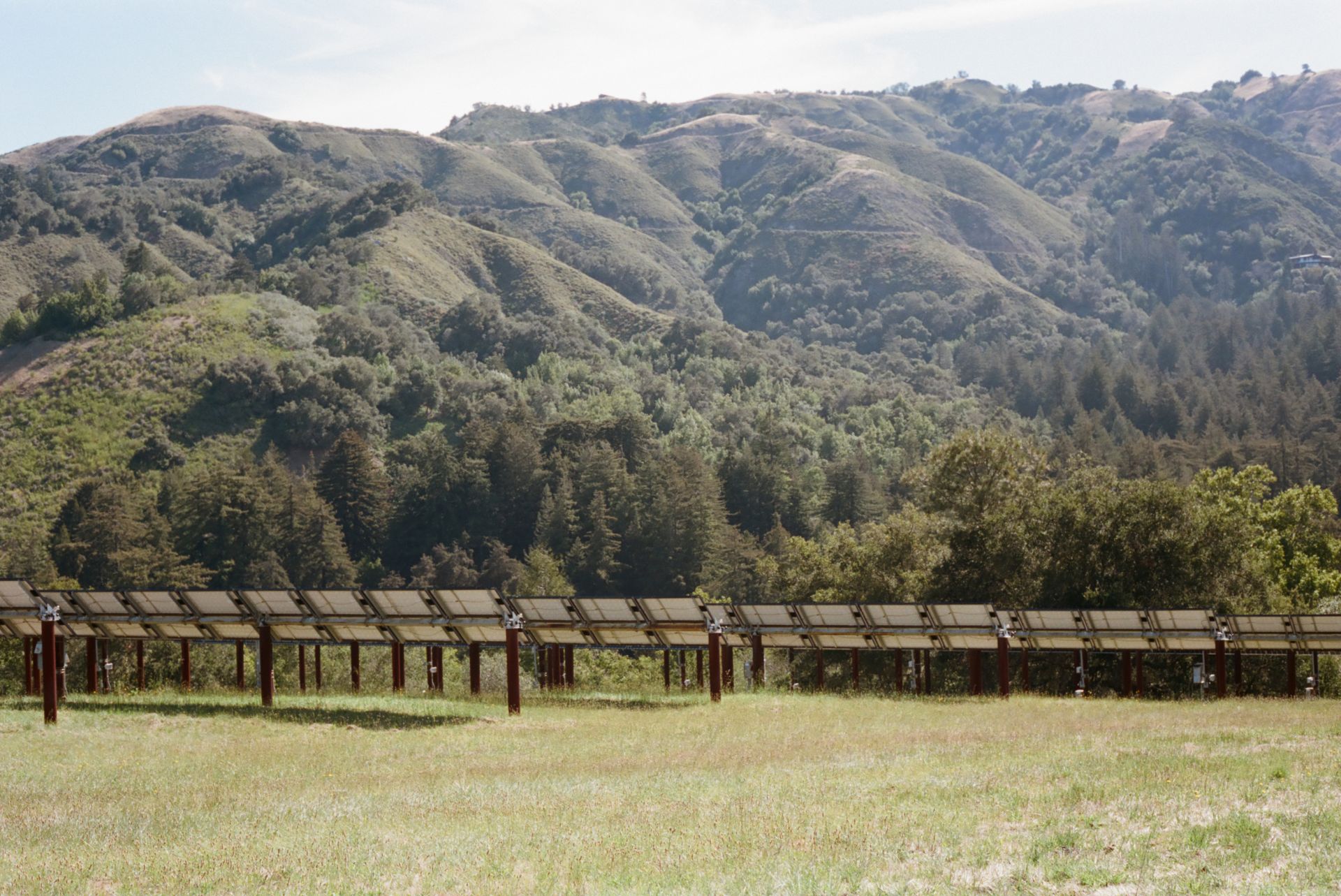
We’ve also tried to give back to the community. We donated land for the Big Sur Volunteer Fire Brigade, which now sits on the property. Much of the remaining land is protected through scenic conservation easements, so it will never be developed. On one hundred acres, we have just forty guest rooms. That balance has always mattered to us.
SL: After more than thirty years at Post Ranch, how has this place changed the way you think about what a place can do?
MF: Absolutely.
I think places change people because they slow us down. We wanted people to spend time with each other, to look outside, to notice where they were. When we first opened, every hotel consultant told me I was making a mistake. They said to charge for parking, charge for the minibar, put televisions in every room, add resort fees. We ignored all of it. We wanted the experience to feel generous, not transactional.
I also think people leave with a different perspective. We were one of the first hotels to put recycling bins in every room. Today that’s completely normal, but at the time it wasn’t. My hope was that guests would go home thinking, “If this hotel can do these things, maybe I can too.” Small decisions have a way of spreading.
As for me, Post Ranch has changed my life in every possible way. I’ve met extraordinary people. I’ve spent decades walking among the trees, breathing clean ocean air, eating food grown with care, and living in a community where people genuinely look after one another. It’s also shaped every project I’ve worked on since. The philosophy we developed here continues to guide everything we do.
Most of all, it’s made me appreciate California. I used to travel constantly. We owned a hotel in Fiji and I’ve been fortunate enough to see remarkable places around the world. But as I’ve gotten older, I’ve realized I already live in one of the most extraordinary places there is. I feel very fortunate.
SL: As we wrap up, what do you hope people understand about Post Ranch that they might not see at first?
MF: I probably get more credit than I deserve.
Post Ranch has always been the work of many people. Mickey Muennig. My wife, Lydia. Greg Hawthorne. Janet. Our neighbors. Our staff. Our investors. None of this happens because of one person.
Big Sur has always been a community that gives back to one another, and we’ve tried to do the same. We contribute a percentage of our room revenue to local organizations, and we started Regenerative California because we believe places like this need continual care. Stewardship isn’t something you finish. It’s an ongoing responsibility.
I may have started the project, but it has always belonged to something much bigger than me.