IDO YOSHIMOTO: THE ARBORIST'S EYE
Photography by Mara Hoffman
Most furniture makers meet wood after the tree is gone. Ido Yoshimoto met the tree first.
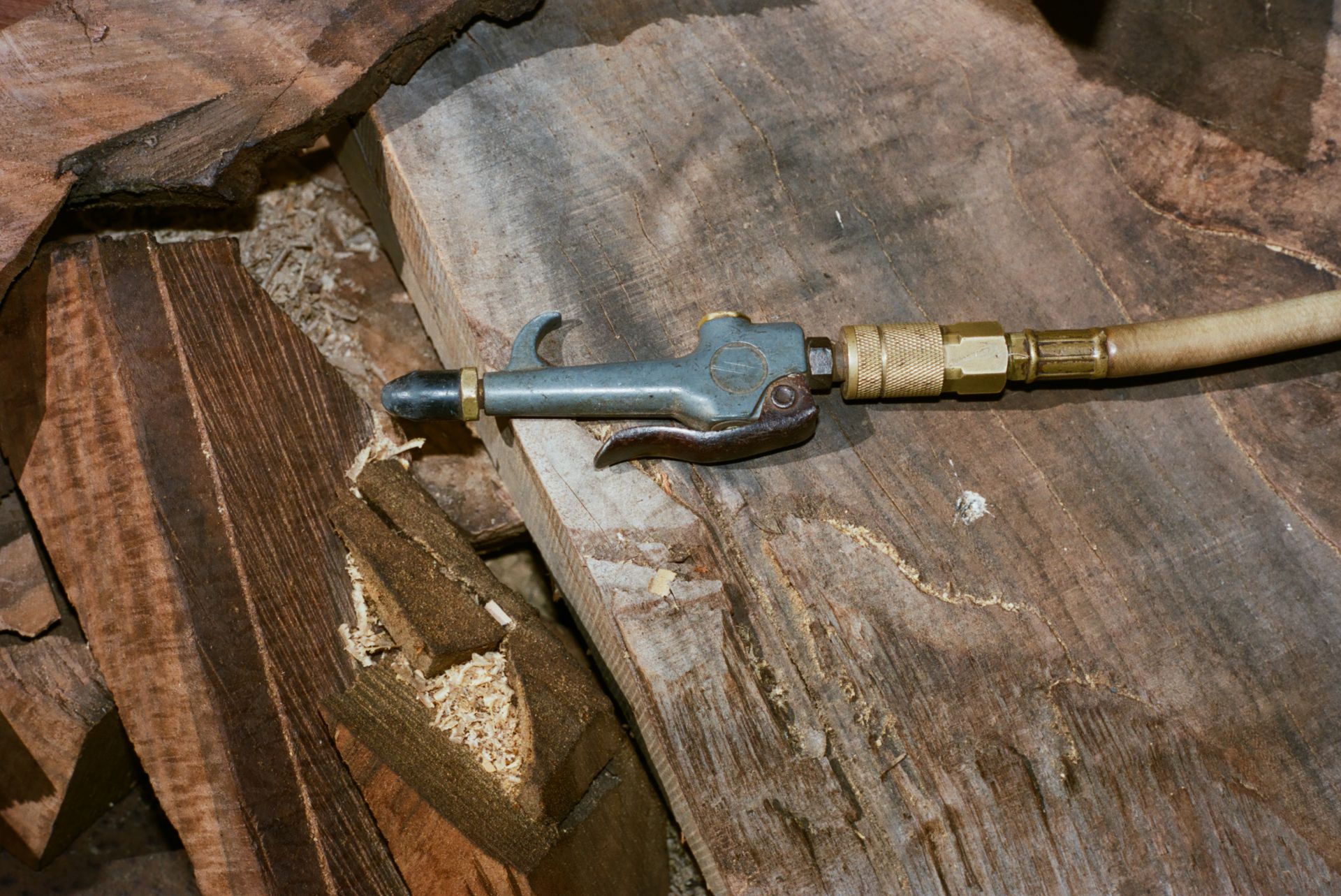
Before establishing his woodworking practice in Northern California, Yoshimoto spent nearly two decades as an arborist, climbing, pruning, caring for, and at times removing trees. Many of the pieces that now enter his studio are trees he has known for years, living organisms whose lives he witnessed long before they became lumber.
That perspective fundamentally reshapes his practice. Wood is not simply a material waiting to be transformed, but the continuation of a life already lived. Every piece carries decades of growth, adaptation, weather, and gravity. Rather than imposing a form, Yoshimoto works in conversation with what the tree has already become, allowing its history to shape what comes next.
His furniture occupies a quiet space between sculpture and utility, where geometric forms meet the irregular rhythms of the natural world. The work feels both ancient and contemporary, refined yet unmistakably wild. It reflects an ongoing dialogue between human intention and the intelligence of nature.
In this conversation with Materia, Yoshimoto reflects on the lessons of arboriculture, the humility inspired by old-growth redwoods, the relationships that develop between makers through shared trees, and why the most meaningful work begins long before the first cut.
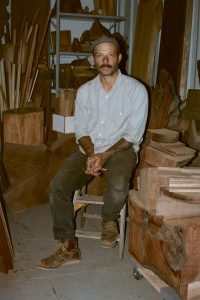
Sarah Len: Before becoming a woodworker, you spent nearly two decades working as an arborist. How did that experience shape the way you understand trees?
Ido Yoshimoto: I began working as an arborist when I was nineteen and still do it occasionally. In many ways, arboriculture is already a form of woodworking. Whether you’re caring for a tree or understanding its structure well enough to remove it safely, you’re learning how wood behaves.
Making furniture feels surprisingly similar. I’m still reading the structure of a tree, only now I’m shaping it rather than pruning it. I try to let its natural characteristics lead the process so the work enhances what is already there.
SL: Most people encounter wood only after it has been milled into a product. You knew trees while they were still living organisms. How does that change your relationship to the material?
IY: I’ve been fortunate to stay in one place long enough to witness the entire life of a tree. I’ve watched trees grow, cared for them, seen them age, fall or be removed, then salvaged, milled, seasoned, and eventually sculpted.
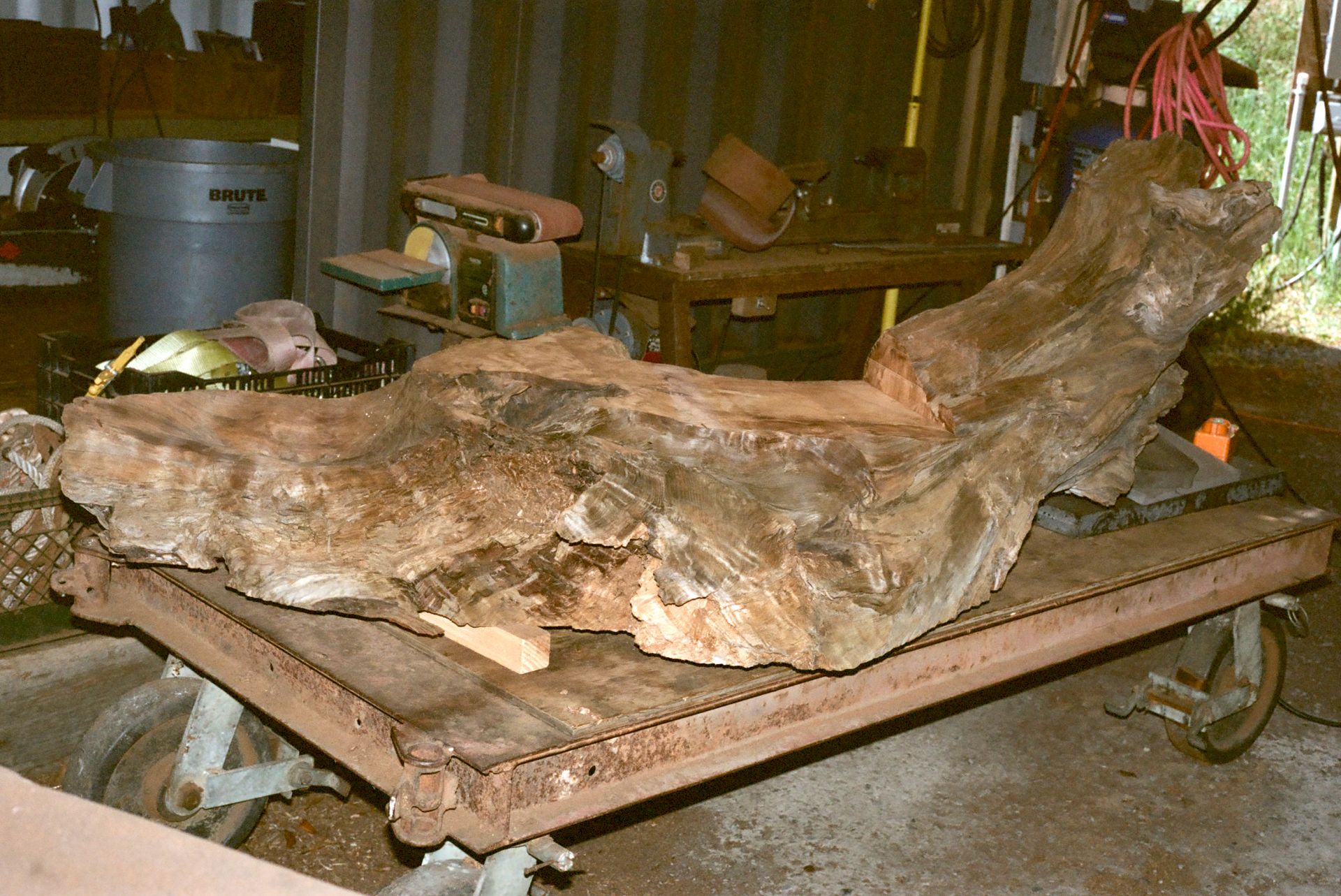
That changes everything. I don’t think of wood as a material. I think of it as a body. These pieces are, quite literally, the bones of giants.
“We’re a species that naturally seeks geometry. We’ve built a world of straight lines, circles, and right angles, while nature rarely offers perfect versions of any of them. My work tries to hold both impulses at once.“
– Ido Yoshimoto
SL: You’ve said that when you approach a piece of wood, you’re interested in understanding what it wants to become. What do you mean by that?
IY: I’m interested in what a piece wants to become, while also honoring what it has already become through its own life. The work happens somewhere between those two realities.
SL: How do you balance listening to a material with imposing your own vision upon it?
IY: My visual language is geometric. I work with simple datums and archetypal forms. The material itself is rarely simple. It’s full of movement, complexity, and unpredictability.
The challenge is finding a graceful balance between those two worlds.
SL: Much of your work begins with salvaged trees. What draws you to working with material that already has a history?
IY: Every salvaged tree carries a history that can’t be recreated. Some I’ve climbed, pruned, or cared for years before they ever entered my shop. By the time I begin working with them, we’ve already shared a relationship.
There’s something meaningful about continuing the life of a tree rather than treating it as something finished.
SL: You mentioned seeing wood as a body rather than a material. Is there a particular tree whose life has stayed with you?
IY: There are countless stories, but one always comes to mind.
There was a chestnut tree in the neighborhood where I grew up. It stood out because Inverness is mostly evergreen, so every fall its canopy turned bright gold. I played beneath it as a child, walked past it every day on my way to elementary school, and watched squirrels scatter among its fallen chestnuts.
Years later, I trimmed that same tree as an arborist. Later still, my daughter and her mother moved into the house beneath it.
When I was around forty, its roots began to fail and it had to be removed. I asked if I could salvage part of the trunk and brought three large sections back to my shop. I made several pieces from one of them, while another slice now hangs on the wall of my home.
Working with that wood felt less like discovering a material than reconnecting with something I’d grown up alongside. In a way, the tree and I had shared a lifetime.
“There’s a story about a priest who believed a redwood was somehow defying God and set out to cut it down with an axe. After several days he was stopped, and the tree is still standing today.
I’ve always loved that story.“
– Ido Yoshimoto
SL: Redwood appears throughout Northern California, yet standing beneath an old-growth redwood feels almost spiritual. How has your relationship with redwoods evolved over time?
IY: Standing in an old-growth grove feels just as powerful today as it did when I was young. They exist on a completely different timescale than we do. We live and die like fruit flies compared to a redwood.
That perspective never really leaves you.
SL: You once described redwoods as being like a cathedral. What do those trees teach us?
IY: I might actually say it the other way around. A cathedral feels a little like a redwood forest.
The trees came long before our architecture or our religions. Standing among them, I feel humility more than anything else, and the presence of something immeasurably older than myself.
There’s a story about a priest who believed a redwood was somehow defying God and set out to cut it down with an axe. After several days he was stopped, and the tree is still standing today.
I’ve always loved that story.
SL: Your work often feels highly refined, yet the materials themselves remain wild and unpredictable. As a self-described perfectionist, how do you navigate that tension?
IY: I’m happy to hear that because being refined while remaining wild is exactly what I’m after.
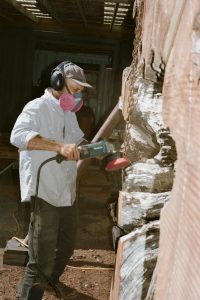
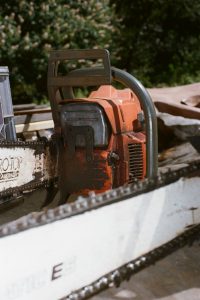
I’m a perfectionist, but I don’t believe perfection exists. I’ve been using a chainsaw for nearly thirty years, and I’m still refining my technique every time I pick one up. For me, refinement honors the tree, but it also honors the practice itself.
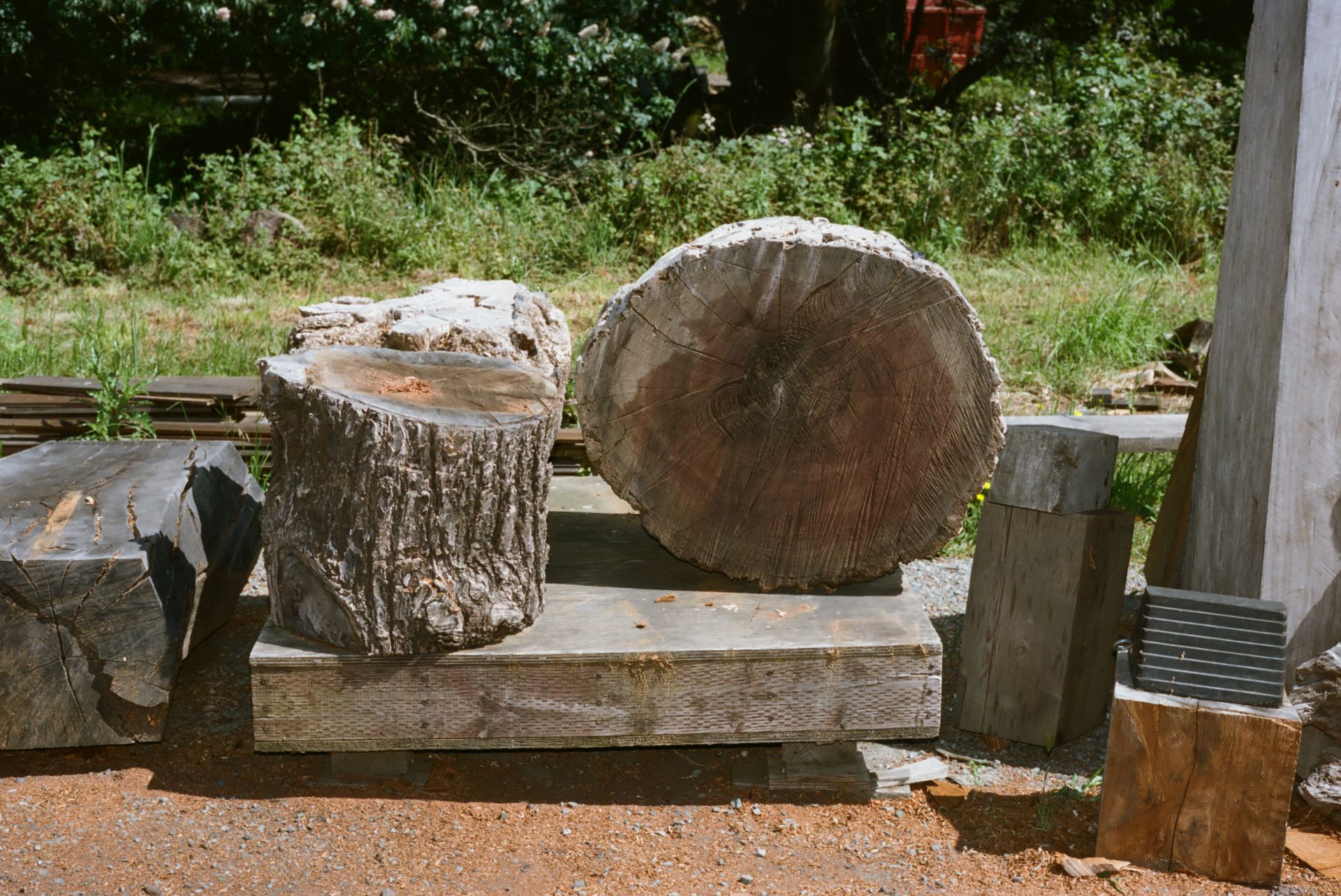
We’re a species that naturally seeks geometry. We’ve built a world of straight lines, circles, and right angles, while nature rarely offers perfect versions of any of them. My work tries to hold both impulses at once.
The geometry gives the eye somewhere to rest before it wanders into the more psychedelic qualities of the wood.
SL: Living and working among other makers creates a unique environment. How important is community to your practice?
IY: Although I spend most of my time quietly working in my shop, the community around me has been incredibly important.
Many of us work from the same salvaged trees. I’ll often share a massive section of wood with another maker, or they’ll pass one on to me. Along with the wood come stories about the tree itself, along with the skills and lessons learned from working with it. Knowledge passes back and forth with genuine curiosity. The tree becomes a kind of connector.
The conversations rarely stay focused on craft. They drift toward family, spirituality, or whatever else we’re wrestling with at the time.
Being around people with such distinct practices has given me permission to trust my own. We’re all a little strange in our own ways, and I’ve come to think that’s exactly as it should be.
SL: What do you think people misunderstand about wood?
IY: Wood is the body of a once-living thing. It exists because it gathered light, absorbed minerals and nutrients, and spent decades responding to its environment. It struggled toward the sun, dug deeper into the earth, and adapted to everything around it.
In that sense, wood is much closer to us, or even to the food we eat, than it is to materials like steel, concrete, or glass. Yet we routinely reduce it to dimensional lumber and engineered products without considering the life that preceded those forms.
SL: Your work feels like it’s continuing a conversation that began long before you arrived. What do you hope it contributes to that conversation?
IY: I was fortunate to grow up in a community where creativity found its way into everyday life. The line between sculpture and object was often blurred. Furniture might have unexpected protrusions, relief, or sculptural details that invited interaction. Things were often made quickly, out of necessity, but also with imagination and playfulness.
Living among those objects made the space between sculpture and utility feel like a natural place to work.
There is a long lineage of artists and makers who have explored that territory before me. My hope is simply to add my voice to that conversation and help carry it forward.