IN PRAISE OF BEAUTIFUL THINGS: STEVE WERNDORF AND THE EVOLUTION OF INN PARADISO
Photography by Alex Noble
Some places ask you to slow down. Inn Paradiso asks you to look closer.
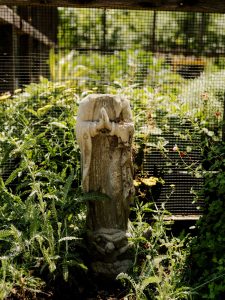
Nothing here feels accidental, yet almost nothing appears planned. A weathered Japanese textile hangs beside a handmade chair. Rare fruit trees grow among native oaks. Vintage automobiles rest quietly between gardens and stone paths. Books spill from shelves beside ceramics, photographs, sculptures, and objects gathered over decades. Together they reveal a world shaped less by collecting than by curiosity. At first glance, the connections aren’t immediately obvious. Spend enough time here, and they begin to emerge.
Long before Inn Paradiso became a destination for artists, architects, musicians, and curious travelers, Steve Werndorf spent decades as a creative director in Hollywood, developing campaigns for some of cinema’s most recognizable films. He eventually traded Los Angeles for California’s Central Coast, where a modest bed-and-breakfast became the foundation for something else entirely.
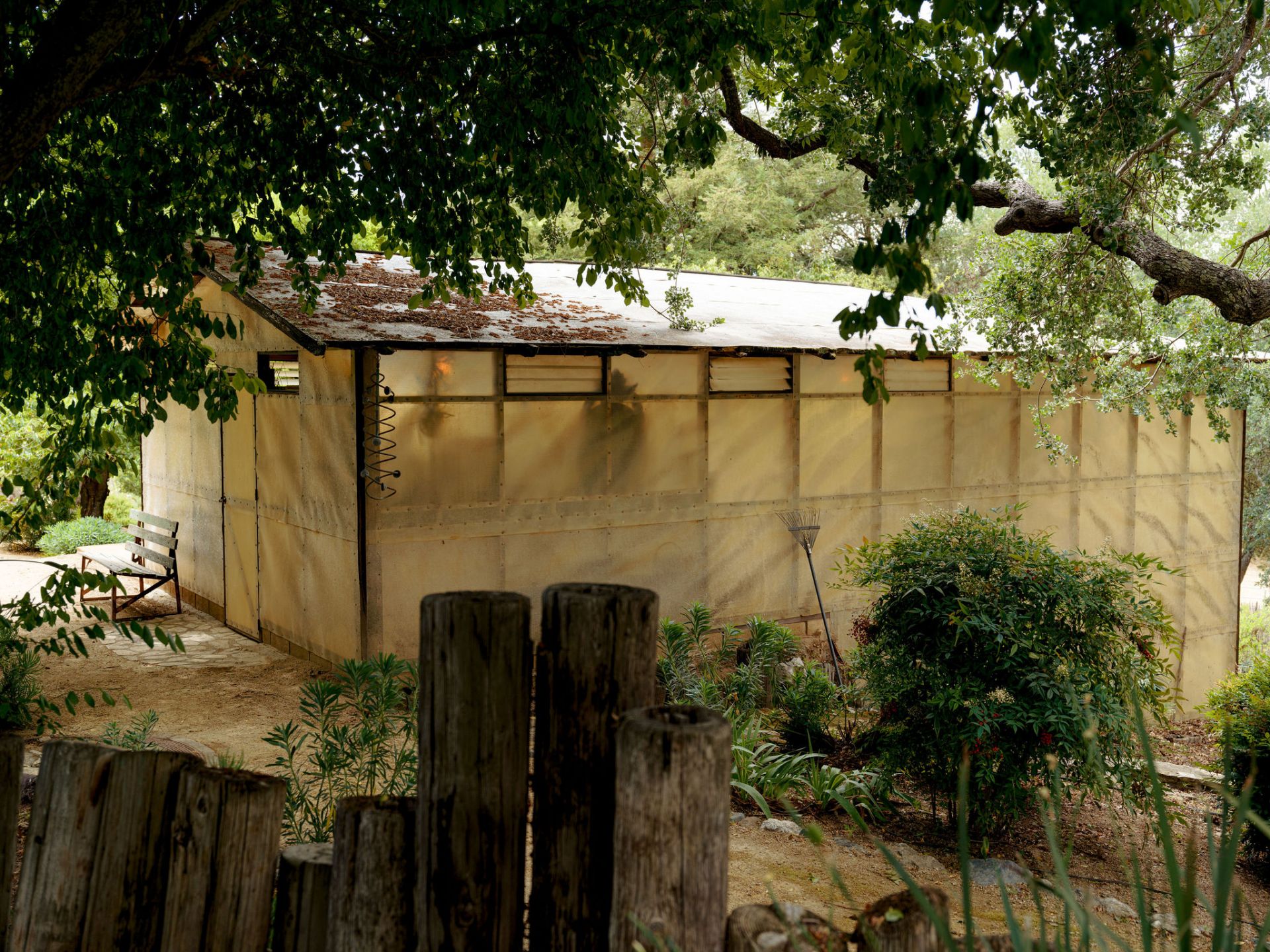
The property evolved through years of small decisions. A chicken coop became a guest studio. Gardens expanded around heirloom fruit trees. Existing buildings were adapted rather than replaced. Objects arrived over time, each chosen because it sparked curiosity rather than completed a collection. Without a fixed blueprint, Inn Paradiso gradually took shape through attention, intuition, and a willingness to let the place reveal itself.
The result is neither hotel nor museum, but something more difficult to define. Architecture, landscape, art, music, and hospitality exist in quiet conversation, reflecting a lifetime of interests rather than a single idea. Nothing asks for attention. Yet everything rewards it. The longer you spend here, the more the relationships between objects, buildings, and gardens begin to emerge.
In conversation with Materia, Werndorf reflects on collecting by instinct, the influence of Japanese craft, the creative freedom of knowing when to walk away, and how a lifetime of attention can shape a place.
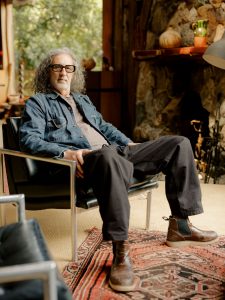
Sarah Len: Inn Paradiso feels less like a hotel and more like stepping into someone’s world. Did you always imagine creating a place like this, or did it evolve gradually over time?
Steve Werndorf: A little of both.
Years ago I used to describe it as a petri dish for growing happiness. That was really the idea. I wanted to assemble enough beautiful things, thoughtful spaces, good food, and generous hospitality that people would simply feel different when they arrived.
I don’t usually imagine the finished project. I imagine the beginning and then trust the process. That’s true in design, but it’s also true in life. When things become too formal they make me nervous, and I think they make a lot of other people nervous too.
One of the greatest pleasures has been watching people arrive who seem a little buttoned up, maybe carrying the weight of work or everyday life, and then seeing them completely relax. I’ve had guests tell me they haven’t felt that free in years. I think it’s because there isn’t much expectation placed on you here. You’re simply allowed to be. There are enough beautiful things around you to keep your curiosity alive, but nothing asks anything of you.
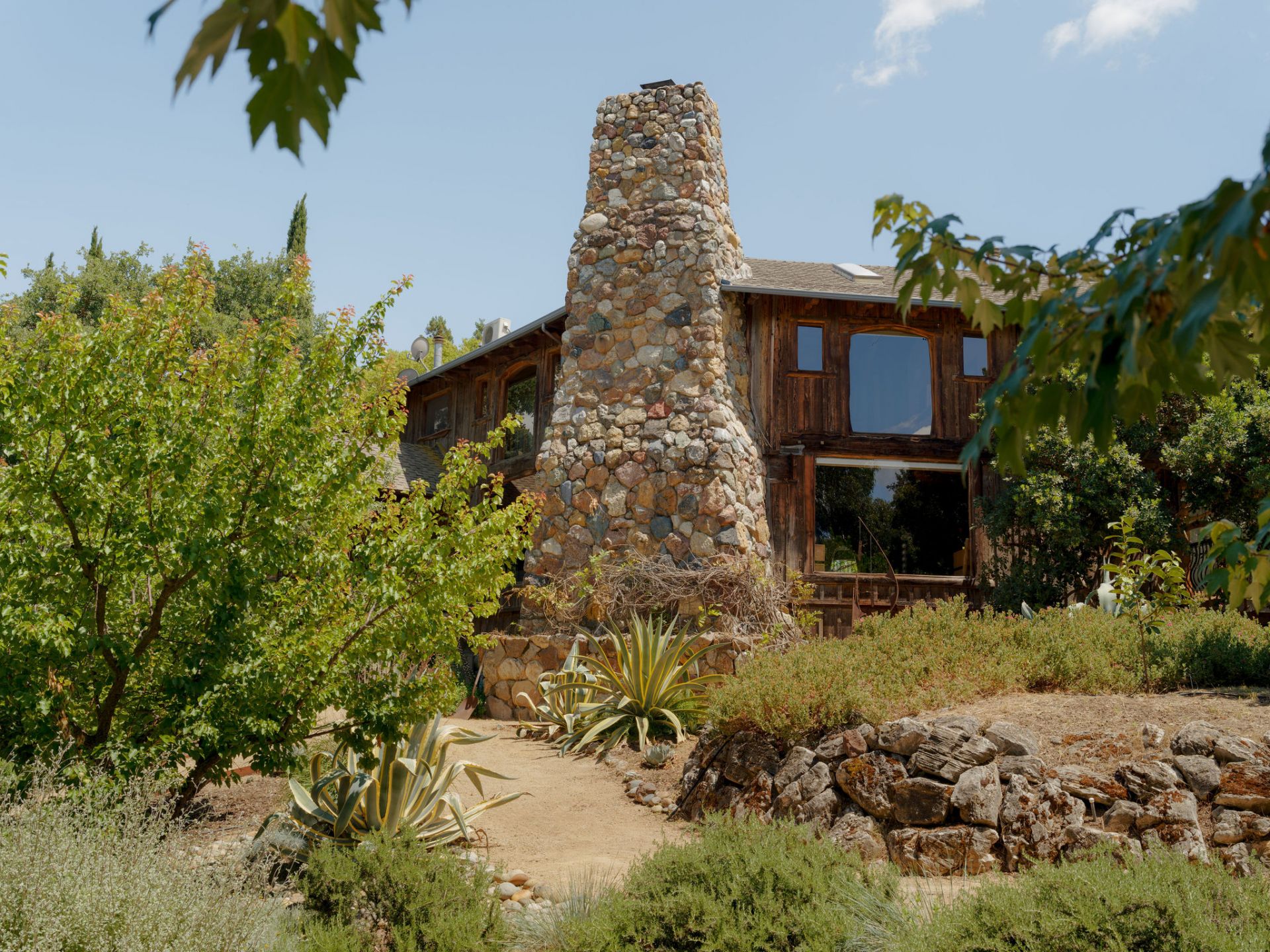
“The entire property is built from wood, stone, and iron, and everything feels hand-touched. You notice little decisions everywhere. A stair rail curves just enough to fit your hand. A fireplace feels sculpted rather than assembled. Nothing is trying too hard, but everything feels considered.
Sometimes I joke that it feels like everyone was paid in cash and weed and simply left alone to make things.”
– Steve Werndorf
SL: Before it became Inn Paradiso as we know it today, what drew you to the property, and how did you approach preserving the spirit of the original house while making it your own?
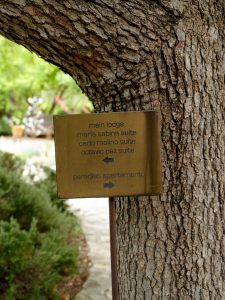
SW: The property was already an inn. There was the original lodge with three guest rooms, and behind it sat what was literally an old chicken coop.
I looked at that little building and imagined an art studio. I imagined it as a place where friends could come stay, make things, and spend time together. Then the inn filled up one weekend and someone asked if they could stay in the studio instead. The same thing happened again with what is now the Gaudí Suite. None of it was particularly strategic. I never sat down with a master plan. I simply let the place tell me what it wanted to become.
SL: That sense of evolution still feels present. The architecture is incredibly cohesive, yet nothing feels overdesigned.
SW: That’s one of my favorite things about it.
From what I’ve been able to piece together, there was definitely an organizing principle, but there wasn’t an exact blueprint that everyone rigidly followed. The original builder was a former Major League Baseball player who became a custom home builder, and much of the extraordinary metalwork and woodworking was done by a craftsman named Bob Bentley.
Sometimes I joke that it feels like everyone was paid in cash and weed and simply left alone to make things.
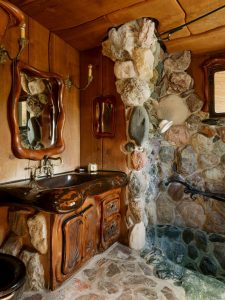
The entire property is built from wood, stone, and iron, and everything feels hand-touched. You notice little decisions everywhere. A stair rail curves just enough to fit your hand. A fireplace feels sculpted rather than assembled. Nothing is trying too hard, but everything feels considered.
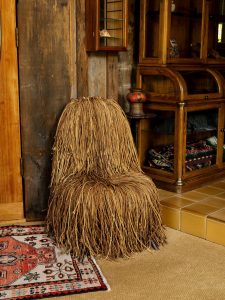
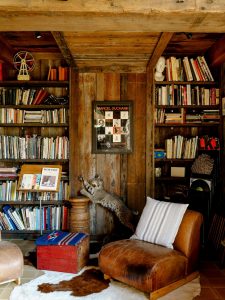
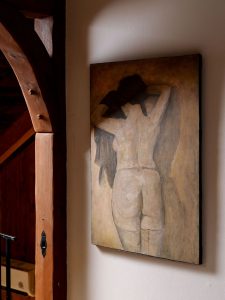
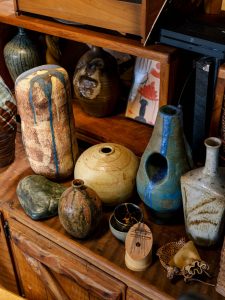
“People sometimes assume collecting is about knowledge, but for me it’s mostly intuition. I’ll come across something that simply feels right long before I understand why I’m attracted to it. Years later I’ll realize it belonged with everything else all along.
I’ve learned to trust that instinct.“
– Steve Werndorf
SL: Every room feels carefully composed, yet nothing feels staged. What does it take to create a place that people don’t simply admire, but genuinely inhabit?
SW: It takes restraint.
My natural instinct is to keep adding beautiful things. Left to myself, I’d probably fill every room. But over the years I’ve learned that people need space. Every object deserves room to breathe, and every room deserves moments of quiet.
Almost nothing here was acquired with a specific plan. I’ll often live with something for years before I know exactly where it belongs. Eventually another piece appears and the room resolves itself.
It’s less about decorating than allowing relationships to develop between objects.
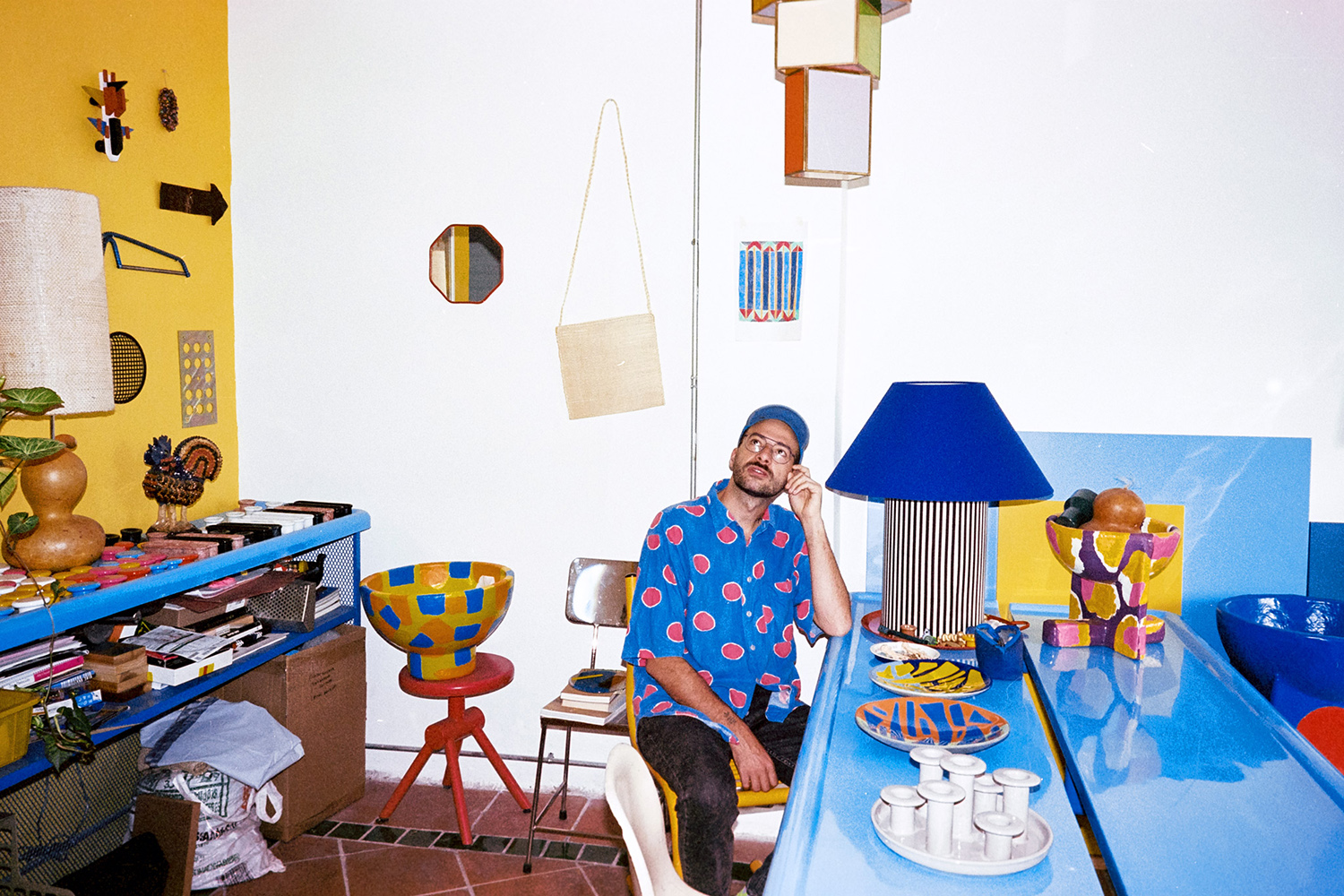
The studio is probably closer to my natural state. It’s filled with books, sculptures, tools, textiles, odd little objects, things I’ve collected over decades. The inn requires a bit more discipline. You don’t want to overwhelm people with too much beauty.
SL: Looking around today, the house contains an extraordinary mix of art, books, music, furniture, textiles, photographs, and objects gathered over decades. It feels less like a collection than a portrait. What do you think it reveals about you?
SW:It probably reveals that I’m interested in a lot of different things. I’ve never wanted to become an expert in only one subject. I’m much more interested in the connections between them.
People sometimes assume collecting is about knowledge, but for me it’s mostly intuition. I’ll come across something that simply feels right long before I understand why I’m attracted to it. Years later I’ll realize it belonged with everything else all along.
I’ve learned to trust that instinct.
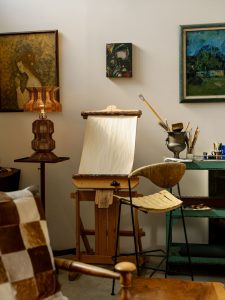
SL: You’ve spent decades walking flea markets, antique fairs, and auctions. What separates something you simply admire from something you decide to live with?
SW: I’m not really searching.
It’s almost the opposite. The object finds me.
People have asked whether I’d ever teach a class on collecting, and I always imagine taking a group through a flea market. I’d tell everyone to choose one thing to look for, not because I expect them to find it, but simply to give themselves a reason to slow down.
Then I’d tell them to forget about that thing completely.
Look at everything.
Stay open.
Eventually something unexpected will ask for your attention.
That’s usually how the best things happen.
SL: Japan appears throughout your life, from the objects you collect to the way you think about beauty and craft. What continues to draw you back?
SW: It feels strangely familiar to me. In many ways, my way of seeing the world feels very Japanese. There’s an appreciation that everyday life deserves beauty, and that handmade things carry a kind of humanity you simply can’t replicate. Every bowl, every textile, every piece of furniture contains the life and history of the person who made it. That gives it value beyond the object itself.
I’ve been reading Soetsu Yanagi’s The Beauty of Everyday Things, which celebrates anonymous craftspeople making ordinary utilitarian objects so well that they become extraordinary. They weren’t trying to make art. They were simply refining their work over time until beauty became inseparable from function. I’ve always been drawn to things like that.
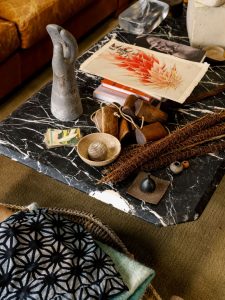
SL: You mentioned the Japanese philosophy of kaizen the last time we spoke. Has that become something you consciously practice?
SW: Very much so. Kaizen is really about small, steady improvement. Evolution instead of revolution. I think in the West we’d probably call it baby steps, but that doesn’t quite capture it. Baby steps imply you’re working toward something bigger. Kaizen is about staying small and staying consistent.
I’ve been trying to apply that philosophy to everything, even something as ordinary as cleaning out my garage. After thirty years of collecting, it’s overwhelming if I think about finishing. But if I improve it a little each day, eventually everything changes.
SL: Over the years, your relationship with collecting seems to have changed. Has it become easier to leave something behind?
SW: Much easier.
There was a time when I’d come across an incredible object at a flea market for almost nothing and think it would be disrespectful to the art gods to leave it there. I felt almost obligated to rescue it.
I don’t feel that way anymore.
Part of that is practical. There’s only so much room. But it’s also philosophical. I’ve realized I don’t have to own everything that moves me. Sometimes it’s enough simply to spend time with an object, appreciate it for what it is, and leave it for someone else to discover.
Oddly enough, I think I enjoy the hunt more now than the acquisition.
SL: At one point you stopped buying objects altogether and began painting the things you wanted instead. You called them “exorcisms.”
SW: (Laughs.) I really did.
It started with a 1963 split-window Corvette. I wanted one badly, and I went to look at one with my friend Xander Berkeley. He looked at me and said, “Steve, you don’t need this.”
I was annoyed because he was absolutely right.
So I went home and painted it instead. Then I painted a Fritz Henningsen chair I’d always admired. A Marantz stereo. French erotic postcards from the 1930s. Native American photographs. All these objects I loved but either couldn’t justify buying or simply didn’t have room for.
I thought painting them would satisfy my desire to own them. Instead, the opposite happened. After spending fifty hours looking at something, I appreciated it even more. The paintings became these strange little exercises in attention. That’s why I called them exorcisms. I was trying to free myself from wanting the object, but in the end I only understood it more deeply.
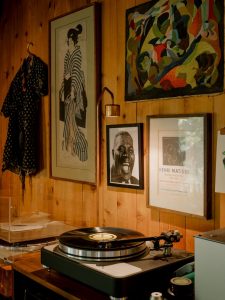
SL: Hospitality seems to be another form of creative practice for you. What do you hope people carry with them after a stay at Inn Paradiso?
SW: I hope they leave with what I’d call a trace of satisfied curiosity that grows into more curiosity.
If someone leaves here and starts paying closer attention to the world around them, then I feel like we’ve done our job. Maybe they notice a beautiful tree they would’ve walked past before, or a handmade bowl, or the way afternoon light falls across a room.
Beauty is already everywhere. Most of the time we’re simply moving too quickly to notice it.
SL: Inn Paradiso seems to collect people as much as it collects objects. Artists, musicians, architects, designers, and curious travelers all seem to find their way here. Why do you think that is?
SW: I think like finds like. This place has always been a labor of love, and I believe people feel that when they arrive. Nothing here has been over-designed or over-managed. There’s a sense of freedom. People can simply be themselves.
We don’t advertise very much. Most guests hear about the inn through someone they trust. I like that. It means people arrive because they’re curious, not because they’ve seen an advertisement. There’s something satisfying about that. People discover the place rather than being sold on it.
SL: Before Inn Paradiso, you spent decades creating campaigns for Hollywood films. Looking back, what did that chapter of your life teach you?
SW: I sort of stumbled into it. I started designing vitamin labels, then newspaper movie listings, and eventually became an art director. Before long I was creating campaigns for films like Jackie Brown, Donnie Brasco, The Spice Girls Movie, Poetic Justice, and dozens of others.
Every project demanded a completely different way of thinking. You couldn’t rely on a formula because every film had its own personality. The work taught me to trust instinct, to keep generating ideas, and to recognize the moment when something finally felt right. Looking back, I realize I approach almost everything that way now, whether I’m composing a room, planting a garden, or setting a table.
SL: Was it difficult to walk away?
SW: I remember driving through Los Angeles one afternoon and seeing three campaigns we’d worked on all playing at the same time: Almost Famous, American Beauty, and Erin Brockovich. I remember thinking, “This feels like the right moment.”
I’ve been smiling ever since.
Well… until Trump.
SL: After all these years, what do you hope people remember about Inn Paradiso?
SW: I hope they remember how it made them feel.
The objects matter. The gardens matter. The architecture matters. But they’re really just the ingredients. What I hope people remember is how they felt while they were here.
If someone leaves here paying a little more attention to the world around them, then I think we’ve succeeded. Maybe they notice a beautiful tree they would’ve walked past before, or the way light moves across a room, or a handmade bowl sitting on someone’s table.
Beauty is already everywhere. Most of the time we’re simply moving too quickly to notice it.